
Until I watched a man in Bern being tried for attempted murder, I assumed trials required juries. But Switzerland doesn’t use juries; instead, it holds bench trials, where judges alone decide if defendants are innocent or guilty.
I did some research to find out more about trials in Bern.
I learned that juries generally exist in countries with common law. Under this legal system, which originated in England, judicial decisions are based on precedent: what courts decided previously in similar circumstances determines what they should decide today. Around two-thirds of the world’s population, however, uses the civil law system, which dates back to Ancient Rome via the Napoleonic Code and bases court decisions on pre-existing written laws. Switzerland, along with most European countries, favors civil law.

The US is a common-law country. Those trials we know from television, movies, and the novels of Michael Connelly, John Grisham, and Scott Turow are guaranteed by the US Constitution, which says that anyone accused of a crime punishable by more than six months in prison has the right to a trial by jury.
Swiss and American trials both involve a defense attorney, a prosecuting attorney, and one or more judges. In the canton of Bern, judges are elected by the cantonal parliament, a method similar to the one used in only two US states, Virginia and South Carolina. In all three places, the legislative body fills judicial seats from a roster of candidates recommended by the legislature’s judicial committee, and party politics plays an important role in who is chosen.
During a US trial, a group of people who ideally know nothing about the case have to be persuaded by the statements and performances of witnesses and lawyers that someone accused of a crime is guilty or innocent. The judge acts as a referee, keeping the fight between the attorneys under control and explaining trial procedures to the jury. I’ve never seen a jury trial, but everything I’ve read leads me to believe that it’s as much a competition over who can tell the best story as a quest for the truth about a crime.

In Swiss bench trials, by contrast, the professional judge who decides the defendant’s guilt or innocence knows everything about the case beforehand. He or she receives recordings and transcripts of every relevant interview; all the background to the crime that the police have gathered, complete with photographs; and data about the accused from both legal teams. In other words, every piece of information that would be presented at a US trial is available to both judges and defense attorneys for days before the trial starts.
Judges preparing for a complicated trial may read twenty thick binders full of pretrial material. Only if they find some of the information they’ve received inadequate will they order a witness to appear in court to answer their questions. Swiss judges use trials to fill in missing data. Sometimes they order the presence of particular witnesses or victims to evaluate if they are lying. They often question the accused at length.
At any Swiss trial, a judge who has previously worked as an attorney must be present; this professional judge is called the trial president. Depending on the severity of the crime, the trial president may be joined by two or even four lay judges. The work of lay judges is irregular and pays about $250 per day, so they tend to be retirees or part-time workers: teachers, ex-policemen, shop assistants, or farmers, for example. Like professional judges, lay judges are required to read all the case materials, and they, too, can request additional pre-trial information and ask questions during the trial.

“Lay judges create work for me,” a professional judge told me. “I spend a lot of time before, during, and after the trial explaining legal issues to them and discussing the case. But I think they’re important because, in a Swiss courtroom, they are the ones who represent the people. Their participation in the trial anchors our decisions about innocence or guilt in the local community. I’m the one who ultimately sentences the convicted criminals, but I listen when one of the lay judges tells me I’m being too harsh or lenient; I take their opinions seriously.”
The Swiss trial I attended involved a man who tried to kill a doctor eating lunch in a crowded restaurant because he thought the doctor (whom he’d seen off and on for six months) had stolen his diaphragm. Yes, he was referring to the large muscle of respiration under his lungs. At times during the trial, he seemed to believe that other organs had been stolen, too—if not by this doctor, then by those at a Bern hospital.
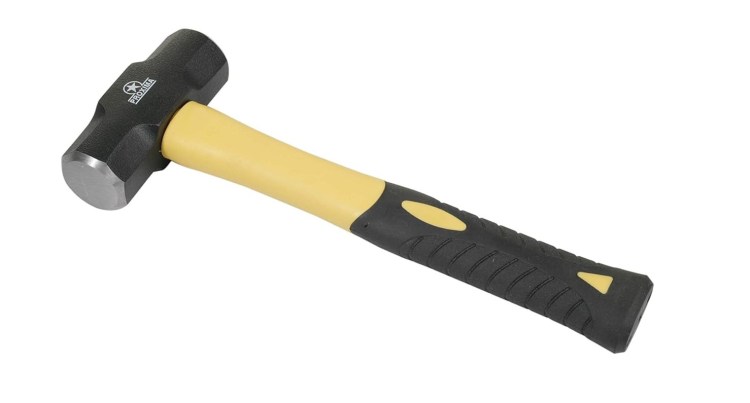
There was no doubt who committed the act of violence. A stranger eating across the table from the doctor stood up to fend off the accused with his chair but not before the accused had hit the doctor’s head from behind with a one-kilo sledgehammer in front of many witnesses. As the doctor fell to the floor, the attacker tried to hit him with the hammer again, but people in the restaurant stopped the man before he could hurt the doctor further.
During the trial, I watched and listened as the judges spoke with the doctor about the changes—practical and psychological—that the attack had caused in his life. Then they talked to the accused. I was impressed with the trial president’s patience as he attempted to get the man to describe what happened on the day of the attack and his reasons for making it. Sadly, the man was too deranged to do anything but talk wildly about his missing body parts and hatred for doctors, so, in the end, his lawyer spoke for him.
I left this trial with the strong impression that everyone in the room, including the prosecutor, wanted to give this disturbed man a fair trial and a chance to tell his own “truth” as best he could. What I saw gave me a deep respect for the bench trial system in Bern. In addition, it made me question to what extent a trial-by-jury is designed to uncover the truth.
 Kim Hays
What a brilliant blogpost. Bravo! I had no real idea how it worked here in Switzerland and am much more familiar with American and/or English trials because it’s what you see on TV or read in books. How amazing to assist at such an interesting Swiss trial. A very Swiss weapon 😄.
LikeLike
Thanks, Melina–I’m glad you found the information on trials interesting. I never really thought about a sledgehammer as a Swiss weapon. Now the corkscrew on a Swiss Army knife–THAT would be a very Swiss weapon, I think!
LikeLike
Hi Kim, very interesting column. The system in Switzerland is similar to our military justice system (as I recall after 60 years) and I thought it was superior to our trial by jury of your peers. If I was on trial I would opt for the Swiss or US military trial (unless I was guilty and had a very expensive lawyer). Really enjoy your essays. Chips
LikeLike
Thanks, Chips. You make me want to look up the US’s military justice system and find out more about it, too. In the end, a lot depends on the quality of the people involved, judges or jury members, which is something the defendant has no control over.
LikeLike
Thanks, Kim. I didn’t know about the differences between common law and
civil law. Sounds like the advantages of civil law are the relatively
well-educated people making the decisions…and the advantages of common
law are the chances of a more diverse decision pool. Do I have that
right? Always fun to learn something new…Hope you are well. Julia
LikeLike
You’ve summed up the difference between jury trials and bench trials brilliantly, Julia. Bern (and other Swiss cantons) try to add some diversity to the decision pool by including lay judges, but they aren’t randomly chosen like people in the US are for jury duty. Since many potential jurors are carefully weeded out by the attorneys on both sides of the case, I’m not sure how random they are at the end, either.
I AM well, thanks, and happy to have just signed the contract with my publisher for Polizei Bern #4, to be out in 2025.
LikeLike