Now that Peter and I are back from Japan, I want to share some of my thoughts and observations with you, mainly because my feelings about Japan have changed so radically since I was 21 and spent six weeks in Tokyo.
As a college senior, I won a small fellowship permitting me to compare factory assembly lines in Sweden and Japan. The committee granting me the money strongly recommended that I do research on factories only in Sweden and forget about Japan because it was too ambitious to do work in both countries. But 21-year-olds are not very good at taking advice. The summer after I graduated, I took off for Stockholm and lived in Sweden for almost a year. I learned some Swedish, visited factories, and worked on a Saab-Scania assembly line for four months. At the end of that time, I was elated but tired and missed my family. Still, instead of going home, I decided to spend six weeks in Japan, seeing what I could find out about Japanese factories.

During those six weeks, I managed to visit some Japanese factories with the help of a kind attaché at the US Embassy. But, living in Tokyo, I knew no one, met no one, and could speak to no one. I was extremely lonely. Nothing I laid eyes on was written in anything but Japanese characters—not street signs, not subway or bus stops, not restaurant menus, nothing! Nor did anyone I encountered speak English. Or, if they did, I couldn’t understand their pronunciation, which was deeply embarrassing. No one was rude to me, but since I seemed to be the only Western woman everywhere I went, people stared at me. On top of that, the weather was scorching and humid, with torrential rain. Japan became synonymous with misery for me, and I left the country with no desire ever to return.
Then, last month, I did return to Japan. I traveled there for three weeks with my husband, Peter, who had planned our trip meticulously, and we both had a fabulous time. The Japan I remember from when I was 21 doesn’t exist anymore, at least not in the cities and villages we visited, all of which are on the tourist’s beaten path. In those places, everything travelers need to know to find their way around is signposted in the Latin alphabet, and on trains, subways, and buses, all stops are announced in clear English as well as Japanese.
Except for the occasional taxi, Peter and I went everywhere by public transportation, and today, Japan’s train and bus stations are filled with signs in English, and information booths are staffed by competent English speakers. And, if that’s not enough, there’s the genius of Google Maps, which explained in advance each step of every trip we took. In addition, almost all the places we ate at, no matter how tiny (and most restaurants in Japan are tiny), had an English menu. To supplement that support, there’s also Google Translate! I could type a question for the taxi driver or waiter into my phone in English, the app would speak the words to him in Japanese, and he’d understand and answer on his phone in the same way.

I realize you may now be thinking, “Well, duh! Of course everything is different in 2024!” But for me, it was a revelation. I don’t expect pampering when I travel. Still, when I remember eating dinner out every night all those years ago without ever knowing what I was ordering or recall how desperately I tried to find the Japanese characters for “Exit” so I could escape from a vast railway station during rush hour, I can assure you that being able to understand and communicate changed my experience of Japan entirely. I now consider it a wonderful place to travel!
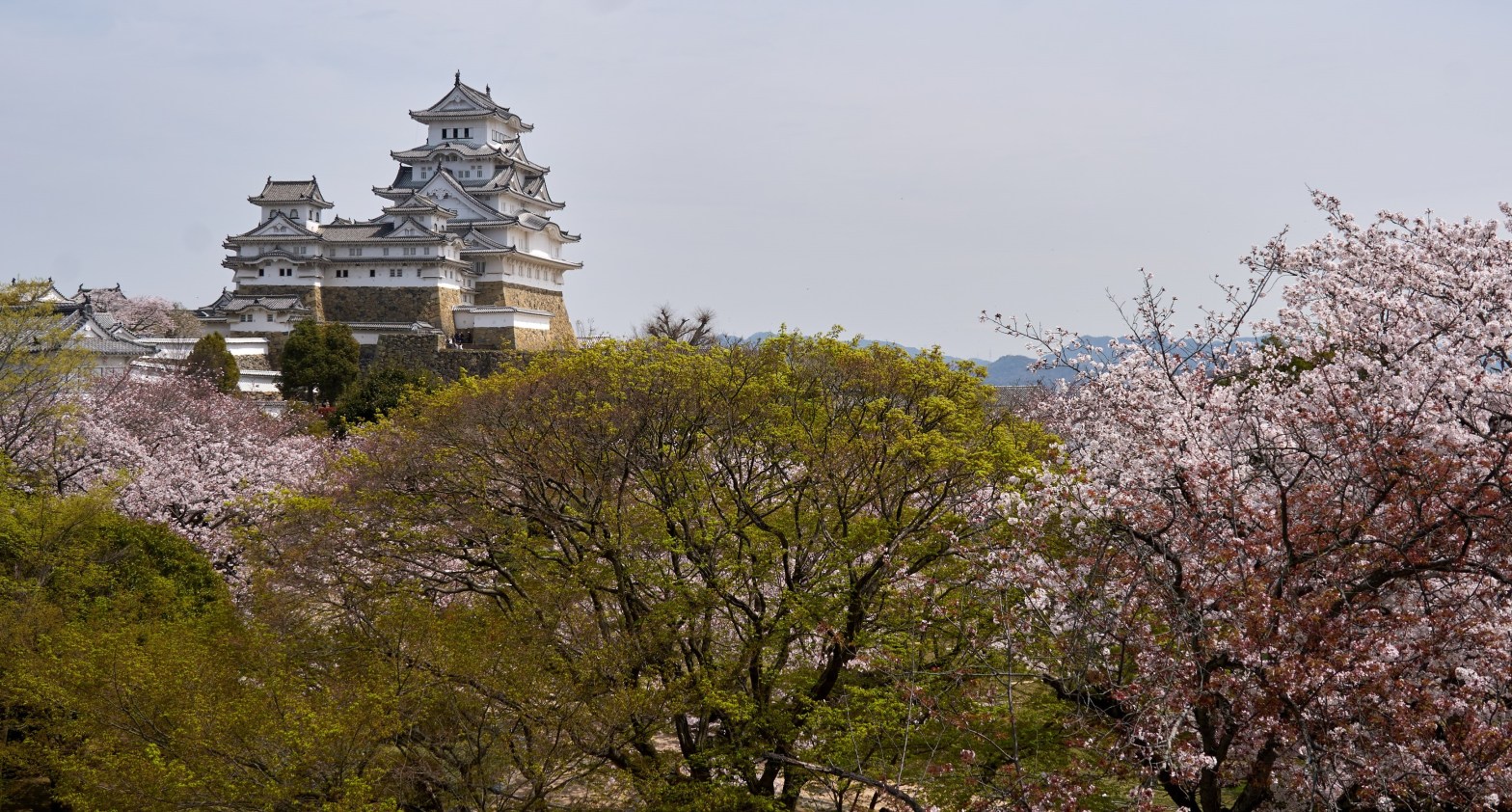
Peter and I visited the standard tourist sights. We had the Michelin Green Guide to Japan, and we stayed on the main island of Honshu, going no further south than Himeiji, where there is a magnificent castle from the early Tokugawa era, and no further north than Nikko with its Buddhist temples and dramatic Shinto shrine. If a building, garden, or museum was in that central region of Japan and Michelin gave it three stars, we saw it—and we managed to fit in a lot of two-star temples and gardens as well.
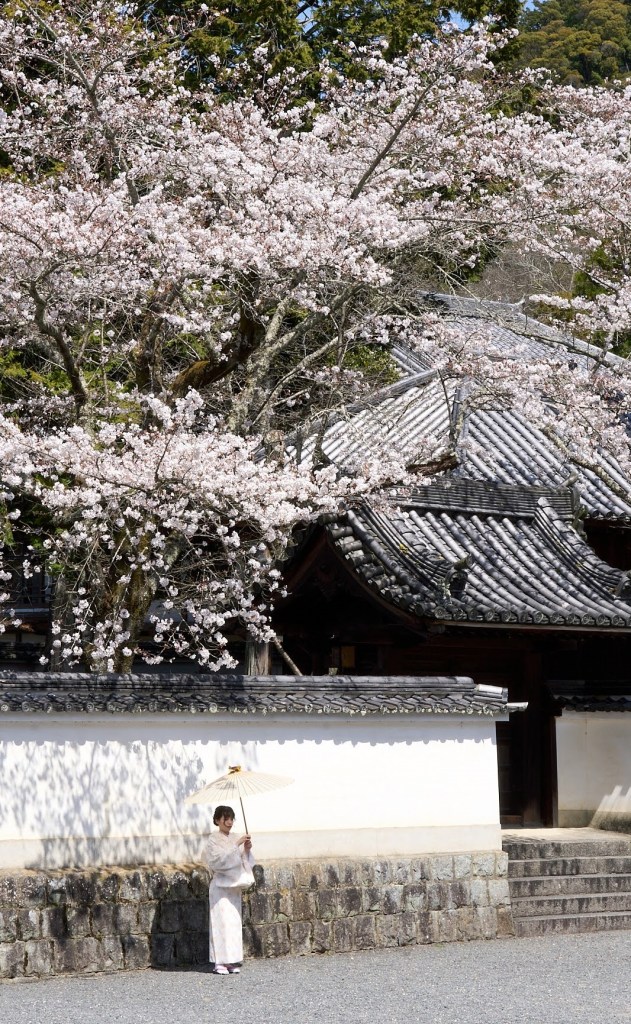
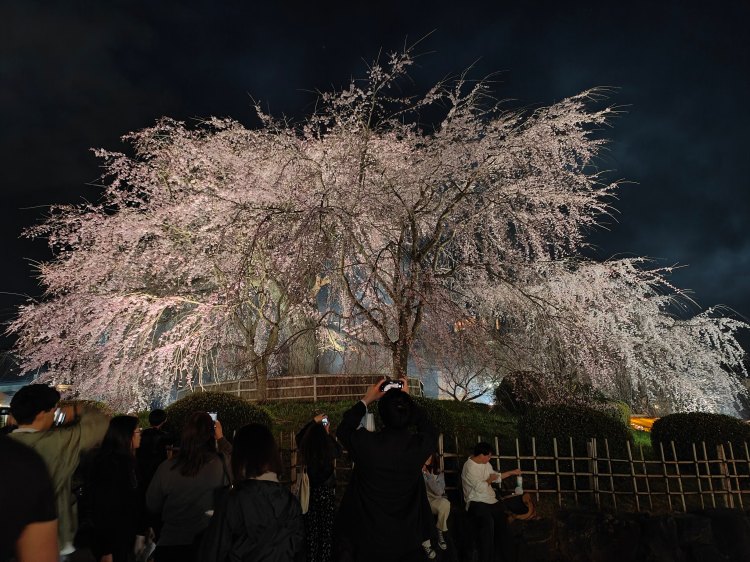
Much as we enjoyed walking for hours along the streets of whatever town we were in, observing people and their daily lives, and as beautiful as many of the Japanese buildings—whether shrines or skyscrapers—were, the highlight for us was gardens. Every temple had its flower beds, koi-filled ponds, carefully shaped trees and bushes, raked white gravel, precisely placed rocks, and—because of the season—its explosion of blooming cherry trees. Some of these gardens were tiny, others stretched up the sides of mountains or into acres of forest, but they were all places of calm, enigmatic beauty. Every bush, tree, and rock seemed perfectly formed and placed, with nothing affected or overly refined about it. It was simply immaculate.
I love wild, colorful English-style gardens, but Japan’s gardens offer something for the brain as well as the eye: an expanse of peace.
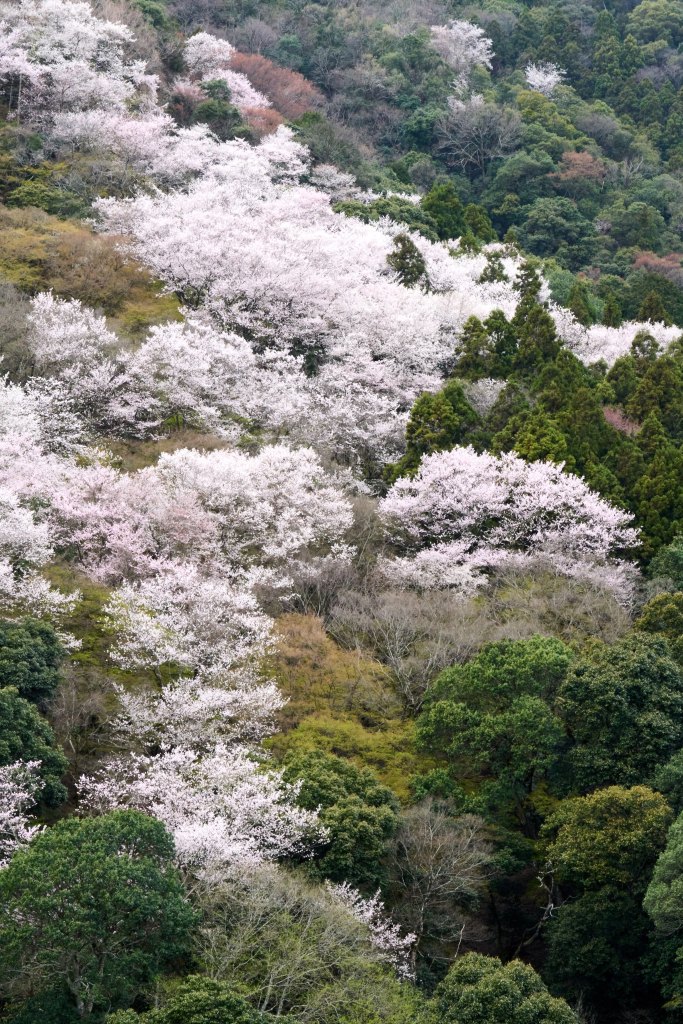
Either Peter or I took these photos of Japanese cherry trees. The first picture also shows Himeji, an early 17th-century feudal castle near the city of Kobe.
 Kim Hays
What a MARVELOUS trip, and interesting post! So glad you enjoyed it, and so interesting to hear about your completely different experiences so many years apart.
LikeLike
Thanks, Ellen. It was a good lesson for me, reminding me how much our memories of a place, an event, or even a person can be colored by the specific circumstances of that time. I guess you could consider this and essay in praise of second chances!
LikeLike
🙂
LikeLike
What a wonderful trip and beautiful photos! So glad you were able to give Japan a do-over.
Greg and I went to Yokohama about 15 years ago, he for work, me for play. While Greg was doing meetings, I would wander about on my own. Loved it. Found that school children made the best interpreters!
LikeLike
Yes, isn’t it nice that I can see Japan with new eyes now? I’m glad you liked the photos. Fun to hear about your experiences in Yokohama. It’s impressive that the school kids were such good interpreters—and friendly, too. You must have really enjoyed that.
LikeLike