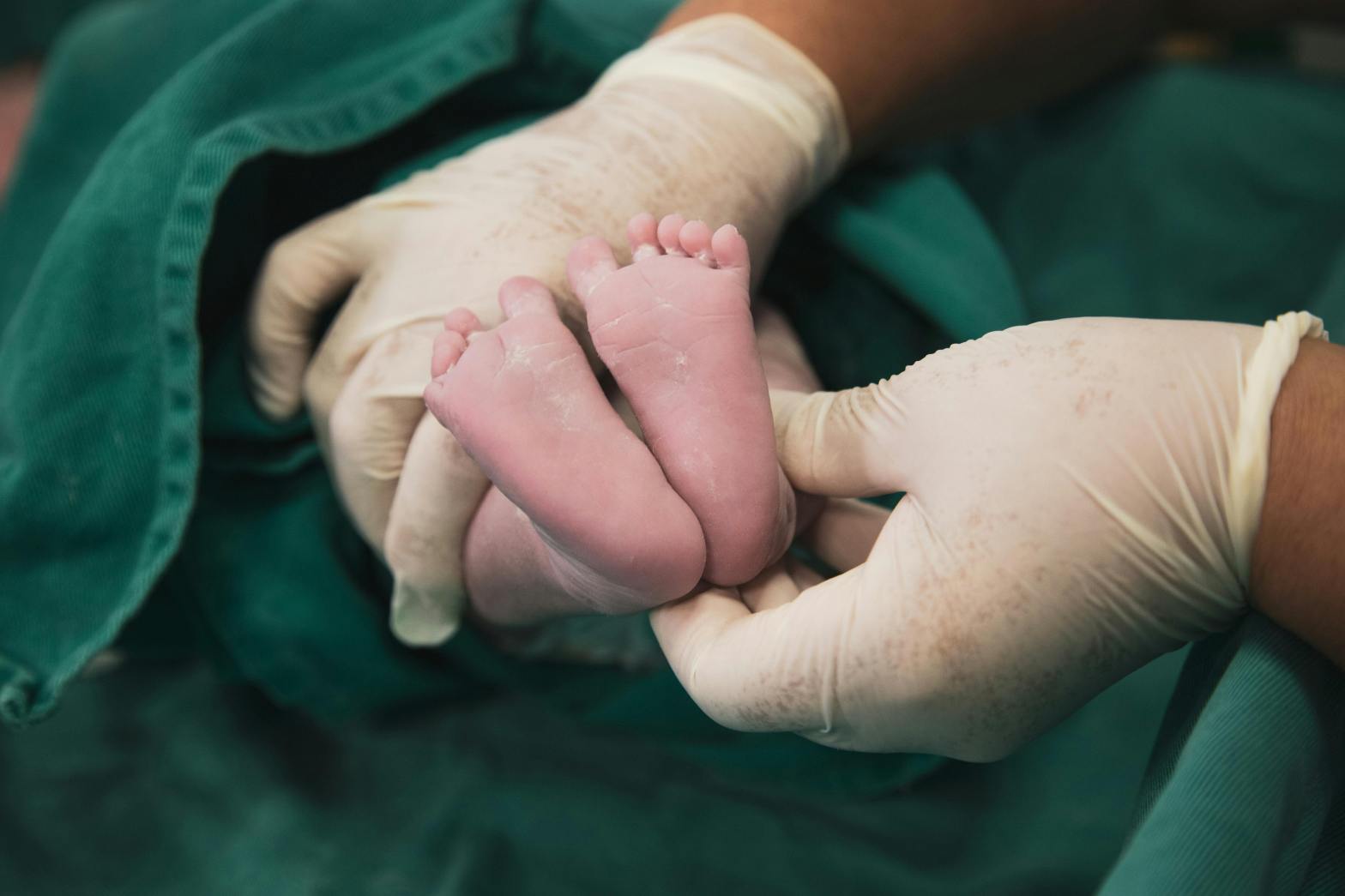
When I moved to Switzerland thirty-six years ago, I didn’t know anyone still practiced midwifery—I thought the profession had gone the way of blacksmithing. Five years later, I walked into Bern’s teaching hospital to give birth to my son and met my first midwife. She was with me during and after the birth and made sure I was clean, comfortable, and out of danger before she left me at the end of her shift. An obstetrician delivered the baby, which was what I’d expected. I only learned later that this was because it was a complicated birth. If the process had been straightforward, I would never have seen the ob/gyn because the midwife would have handled the delivery.
One reason I was unaware of midwives in the US is because they are scarce: there are only four per 1,000 live births. In Norway, New Zealand, and the UK, by contrast, there are around 50 midwives per 1,000 live births; in Switzerland, France, and Germany, approximately 30. The disparity is striking.
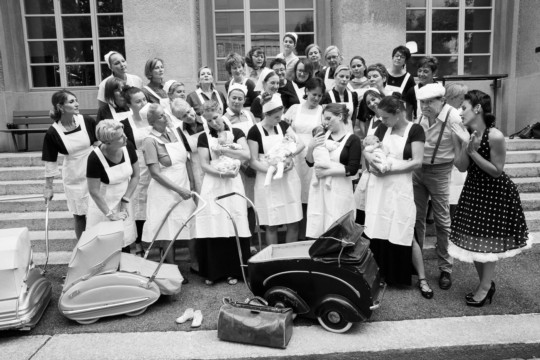
Another disturbing difference between many wealthy countries and the US is how many American mothers die while giving birth. Norway has a maternal death rate (per live births) of two and Switzerland of three; in the States, it’s 24. Studies suggest that one of the many reasons for this discrepancy is the lack of midwives.
I’m bubbling over with statistics about midwifery because I recently asked a Swiss woman named Jeanne who has been a midwife for over 20 years about her job training and career. I wanted share some of what I learned–and Mother’s Day seems like a good time to do that!
Jeanne told me she studied nursing and worked in Bern’s best known hospital for a decade. By the age of thirty, she’d been doing emergency room nursing for several years. “I realized that I was either going to suffer a burnout or disconnect myself completely from the blood and pain,” she told me. “Neither of those ways of coping seemed healthy, so I knew I had to make a change.”
The change she chose was to become a midwife. The job would still mean blood and pain but with happier outcomes. First, though, she’d need to train. With her doctor husband supporting her decision, she started commuting to Zürich, where she could learn midwifery while working part-time as a nurse.
“My emergency room experience created an odd situation for me during my training,” she told me. “Many of my fellow students were in their early twenties with no experience in the healthcare field while I was older and a nurse. Still, I had almost as much to learn about caring for pregnant women physically and emotionally as they did. But I knew more than my teachers when it came to obstetric emergencies.”

When her training was over, Jeanne got a job in the delivery ward at the teaching hospital in Bern where she’d been a nurse. She worked shifts with several other midwives and was assigned women patients as they arrived at the hospital in labor. The ideal situation would have been for each pregnant woman to be cared for throughout her labor and delivery by the midwife who first received her, but that was seldom possible. There were simply too many women and not enough midwives. So Jeanne often found herself dashing from patient to patient, sometimes finding another midwife who was between assignments to support one woman having a difficult labor while Jeanne guided another woman through her delivery.
“The division of responsibility between midwives and doctors is clearly defined,” she explained. “Anesthesia has to be administered by doctors. They perform caesarians and are the ones who deliver babies with tongs or vacuum extractors. Many births are straightforward and can be carried out from beginning to end by a midwife. If there are complications, we always hope we’re working with a doctor who’ll discuss the options with us and listen to our opinions. But some doctors only know how to give orders—which is appropriate in an emergency, but otherwise not pleasant.”

In her early forties, with her husband working full-time and her daughters in first and third grade, Jeanne made a second change in her working life. As a result, for the past ten years, she has seen pregnant women and their babies in their homes before and after (but not during) delivery. This has allowed her to control the number of clients she accepts. With Swiss health insurance paying for at least ten and often more visits from a midwife before and after a baby is born, many women schedule midwifery appointments early in their pregnancy. Ideally, the mother-to-be and midwife can establish a supportive relationship during the pregnancy that will continue for weeks or months after the baby’s birth.
Jeanne described the advice and care she currently provides for the six women and babies she visits postpartum, paid for by the Swiss health insurance system. All I could think was, “The US needs more midwives!”
Do you know a practicing or retired midwife? Do you have comments or concerns about midwives doing work that is traditionally done in the US by gynecologists, obstetricians, pediatricians, and nurses?
Baby photos from http://www.pexels.com. Credits: Hannah Barata, Laura Garcia, Rene Asmussen.
 Kim Hays
Kim, I had a midwife for my first child, Adria—-1982—and planned to keep her for the delivery, until my water broke but my contractions didn’t start. About 8 hours later—walking to see if they would start, I consented to a Pitocin induced delivery—-very fast, very brutal—-at the advice of the attending physician. In the 80’s, midwives were popular in my cohort, but it was clear at the hospital that they were not given much of a role. I was glad to have a healthy daughter; gladder to have a natural delivery with my son, 9 years later—-but by then, midwives were no longer as evident in the system.
LikeLiked by 1 person
Hi, Julia. I’m so sorry I missed seeing your comment in my emails until this morning. Thanks for sharing your experience when Adria was born. From what you say, it sounds like midwives are more a thing of the past in the US than something to hope for in the future. Perhaps doctors and nurses simply wouldn’t give them a chance to fulfill their roles. Looks like if I want to know why they faded out of the US system, I’ll have to do more research!
LikeLike