I’ve recently returned from twenty-six days in the US, where I joyfully descended on one friend after another in seven different parts of the country and was welcomed with food, entertainment, and wonderful talk. It was a glorious trip. By far the best part was the concentrated company of each dear friend I saw. Our three or four days of conversations took place at kitchen tables, on terraces and lawns, in cars, cafes, and restaurants, on walks, and at one museum or garden after another. I’ve summed up my travels with one lovely memory per place, although I collected many, many more.
- Chicago, Illinois
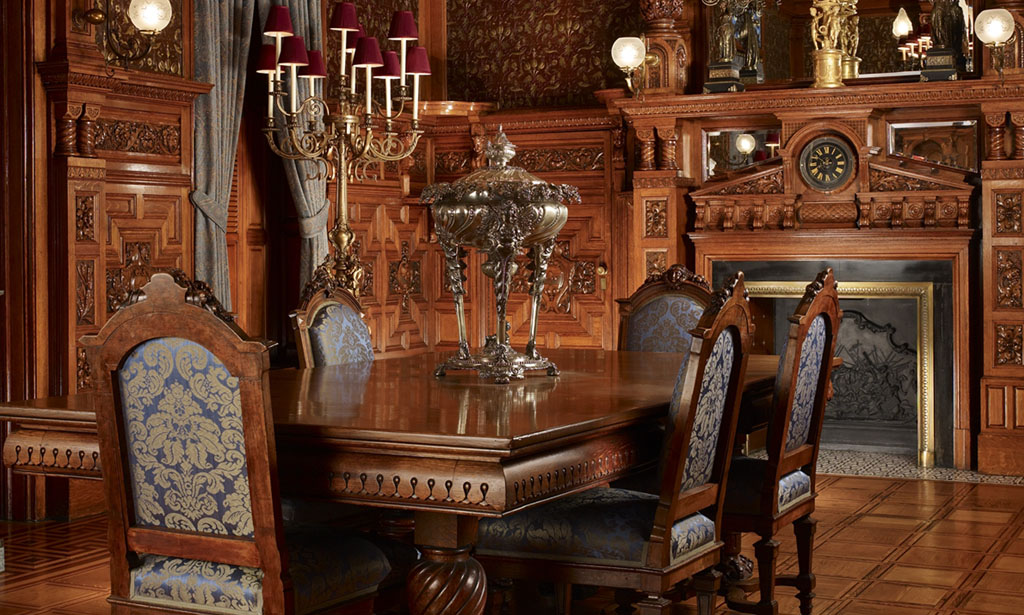
A trip to Chicago means visiting the Art Institute, which houses the largest collection of Impressionist and Post-Impressionist art outside of France. This trip was no exception. But what stays with me most vividly is the Driehaus Museum, a restored townhouse that’s a magnificent example of Gilded Age architecture and décor. Built in 1883 but only opened as a museum in 2008, the house showcases exquisite woodcarving, tilework, stained glass, furniture, and Tiffany vases and lamps. It’s also a space for changing art exhibitions. This time, the paintings on show were by Rory McEwen (1932-1982), a Scottish painter of plants, flowers, and vegetables. I’d never heard of him, and now I’ll never forget his work.

2. Madison, Wisconsin
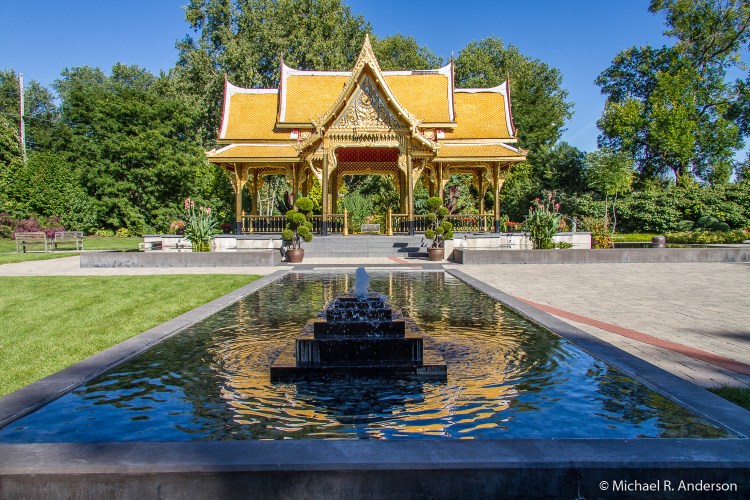
Madison is a university city—a fifth of its total population of 284,000 consists of undergraduates and graduate students. Although the mean temperature in January is -11°F (-24°C), it’s a welcoming place, full of lakes and attractive buildings, including several designed by Frank Lloyd Wright. It’s also home to the Olbrich Botanical Gardens, which display a feast of seasonal flowers, shrubs, and trees and, in one corner, the Royal Thai Pavilion. Covered with gold leaf, the pavilion was an unexpected gift to the University of Wisconsin-Madison from its Thai alums and the Thai government, approved by the Royal Family. There is nothing else like it in the continental US. The building was built from scratch in Thailand, then disassembled and crated for transport. For seven weeks, it traveled by boat, train, and truck to Madison, where nine Thai artisans arrived to reconstruct it. It’s set on a pond amid lush greenery and brightly colored flowers, and I found it an astonishing sight.
3. Newton, Massachusetts
This town was settled in 1639. It borders on the city of Boston and was originally part of neighboring Cambridge before becoming its own town in 1766. Today, it is home to 88,400 people who have settled in its thirteen neighborhoods (referred to as villages). I stayed with my friends in the village of Newtonville.
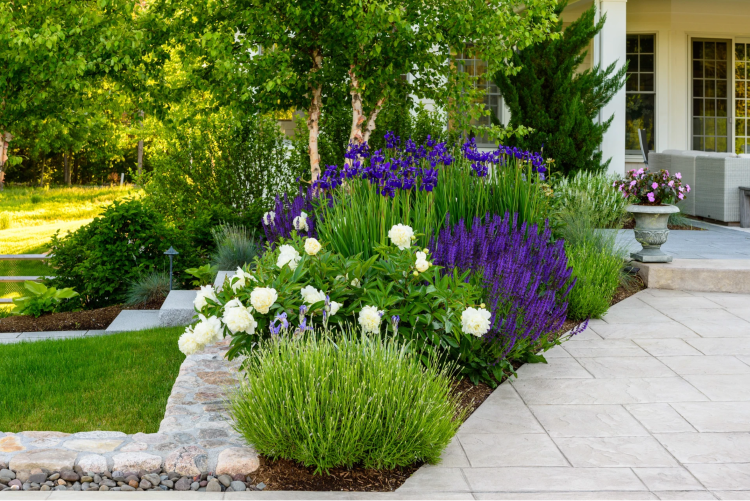
Years ago, I worked in Newtonville for three and a half years before moving to Berkeley, CA, for graduate school. I didn’t remember from that long-ago time how beautiful the front gardens of Newton’s many homeowners are. Walking with my friends on a Saturday morning through the town’s quiet side streets, I kept stopping to gape at front yards full of towering rhododendrons and enormous peony bushes in full bloom, along with lilies, purple alliums, and irises of every color. Because I’ve spent the past 37 years in a city where around two-thirds of the population lives in rented apartments, I’d forgotten how much love and hard work Americans can put into their yards.
4. Cambridge, Massachusetts
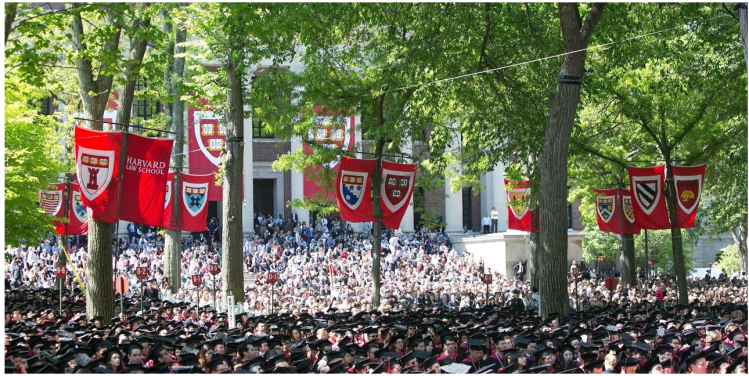
In Cambridge, I shared an apartment for five nights with three women who entered Radcliffe College in 1971 and graduated from Harvard University four years later, as I did. Our apartment was a fifteen-minute walk from Harvard Yard, and we spent most of our time in Cambridge at the special events held for our fiftieth reunion. Presentations, panel discussions, gatherings for various interest groups, film screenings, receptions, and three meals a day were available for us to choose from, along with museum tours, walks, and, in light of recent political developments, rallies and brainstorming sessions. I spent time with many people I cared about, reacquainted myself with men and women I hadn’t seen in years, and enjoyed every event I attended, ending each evening happy but exhausted from talking and listening amidst a cacophony of voices.
It’s worth mentioning that most of those voices were male. The Harvard class of 1975 consisted of 1,275 young men and only 325 young women. Approximately 40% of those men and 33% of the women attended this reunion, some with spouses. Meeting with around a hundred of my former female classmates and reminiscing about how we struggled to navigate our way through crowds of male students and professors was a highlight of the reunion.
5. A house on top of a hill at the end of a country road near Putney, Vermont, surrounded by forest and fields
After the overexcitement of the reunion, it was heaven to retreat with one of my friends to her house near Putney and find myself in the middle of trees, grass, and—apart from birdsong—deep silence. We had cool weather, perfect for walking, and enough time to talk at leisure.
Putney has a population of 2,300 people; they’re a mix of native Vermonters and transplants from big cities further south. New England common sense and various brands of alternative wokeness coexist in the public spaces. One of the most charming of these spaces is the Putney Diner, where we had breakfast one morning. You can enjoy a classic stack of buttermilk pancakes with a pitcher of warm maple syrup, OR a breakfast burrito with chorizo. A homemade cinnamon bun OR gluten-free toast. For lunch, you can have Mom’s Meatloaf with mashed potatoes OR arugula salad with beets, apples, goat cheese, sliced almonds, and a raspberry vinaigrette dressing. This, too, is small-town America!

6. Shelter Island, New York
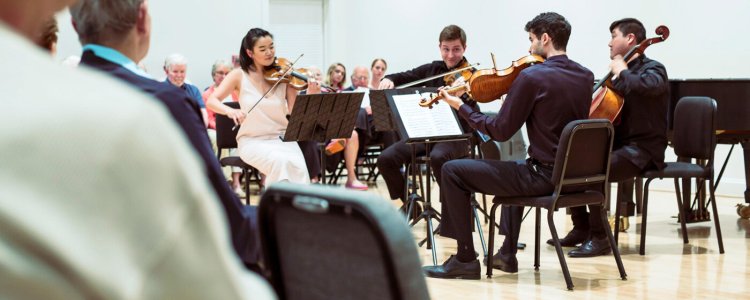
I stayed three nights with a close friend in the former whaling port of Sag Harbor, which is now a beloved summer spot for New York City folks–and the permanent home of a good friend. It’s not Sag Harbor I want to write about, though, lovely as it is, but nearby Shelter Island, which is the home of the Perlman Music Program, founded in 1994 by violinist Itzhak Perlman and his wife, Toby. In addition to featuring a summer school for musically gifted 12- to 18-year-olds, the program also holds a chamber music workshop for young artists aged 18 and up. My friend astonished me by announcing that we would be driving one evening to Shelter Island to attend a chamber music master class. First, we sat a few feet away from four musicians in their early twenties who played a movement of a Beethoven string quartet more beautifully than I could have imagined possible. Then we listened to their teacher, Laurie Smukler, a violinist on the Juilliard faculty, discuss with them how they could play the piece even better. The discussion was well beyond my understanding, but still fascinating.
7. New York City
When I’m in Manhattan, I go to see art, which means, at the very least, a trip to the Metropolitan Museum on Fifth Avenue. My next choice, after the Met, is the MAD: the Museum of Art and Design at Columbus Circle, which displays modern and contemporary crafts. And what extravagant and extraordinary work it is! Jewelry, glassware in every shape and color, pottery, objects made of wood, paper, fibers, and metal, as well as plastic—I can’t keep track of all the materials used by the artists that MAD showcases. There are practical craftworks—furniture, vases, wine glasses, clothing, earrings—and then there are fantastical creations that defy description. I may not always like everything I see, but I’m never bored by it.

Now I’m back in Bern, which also provides me with gardens, museums, concerts, good restaurants, and beloved friends–with the important addition of a terrific husband.
I’m glad to be home.
The picture that begins this post is of the dining room at the Driehaus Museum, which holds the copyright of the photo. The Idesano Corporation retains the copyright to the photo of the Newton garden. Harvard Alumni Entrepreneurs provided the photo of the Harvard graduation, and Hero Image, the picture from Generation Paper, a MAD exhibition.
 Kim Hays
What a thoroughly remarkable trip – so glad you had such a great time! Thanks for taking us along with you – so interesting!
LikeLiked by 1 person
Thanks, Ellen. What’s better than a trip that combines catching up with friends while you do interesting things with them?!
LikeLike
Wow — what an absolutely fantastic trip, Kim, well described and well photographed. Friends, great sights… 🙂
LikeLiked by 1 person
Thank you, Dave. Back to books next time, but I wanted to share my travels.
LikeLiked by 1 person
Great post—as usual.
LikeLiked by 1 person
Thanks, Kimball. Next stop (but not until September) is England! That will be fun, too.
LikeLike