
Yesterday, December 6, was the day of Saint Nicholas, the patron saint of children and the fourth-century bishop of Myra, a Byzantine city in what is now Turkey. On this day, many Swiss-German households with young children are visited by “Samichlaus,” as Sankt Nichlaus is pronounced in the Swiss-German dialect. He doesn’t arrive in the middle of the night while everyone is asleep like Santa Claus. Instead, he rings the doorbell and comes inside to talk to the children about how they’ve been behaving.
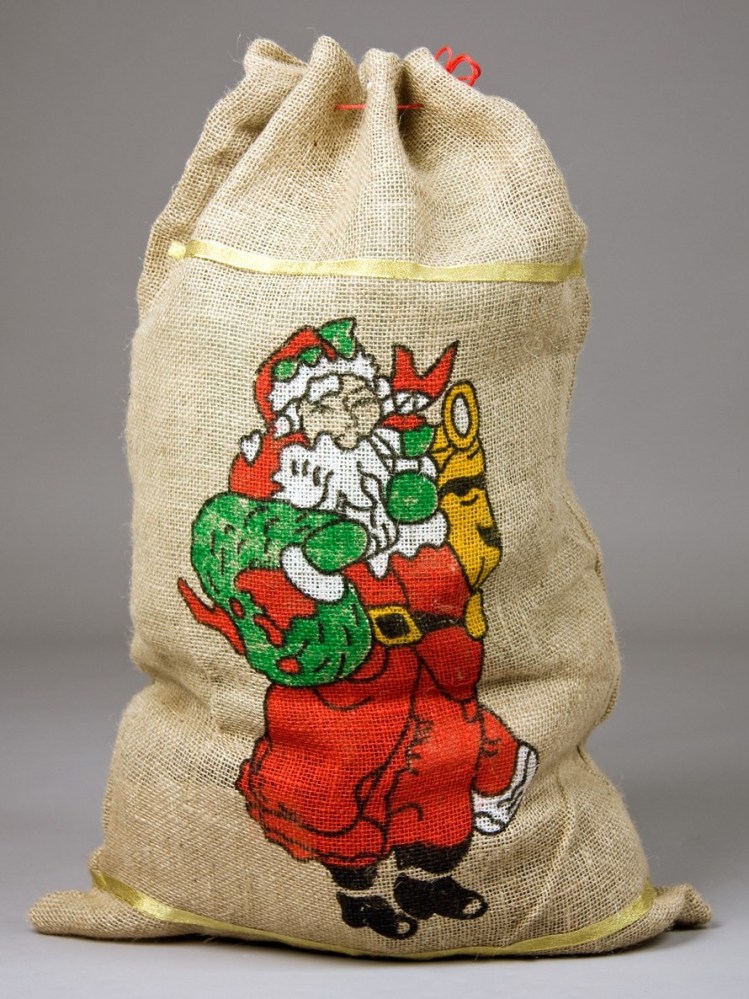
Switzerland’s Samichlaus has white hair and a long white beard, carries a book and a large sack, and wears a red robe trimmed with white fur, sometimes with a waist-length cape over his shoulders. In Bern, he wears the fur-trimmed hood of his robe over his head, while in other cantons (especially the predominantly Roman Catholic ones), he wears a bishop’s mitre and carries a crook. Instead of flying around Switzerland in a sled pulled by reindeer, Samichlaus rides through the forest on a donkey, and he is assisted not by elves but by Schmutzli, a demonic figure with a long brown beard who wears a brown monk’s robe. Originally, Schmutzli’s job was threatening to carry bad children away to hell, but he is a much reformed character in this era of gentler parenting!

Every Swiss family creates its own Samichlaus tradition, but generally, the red-robed figure is a family friend in a costume. Each year, parents prepare Saint Nick for his (or sometimes her) visit to their home with a short list of their kids’ good and bad deeds. Our Samichlaus, whose real name was Igor, would hide the list in his enormous book and arrive on foot; he always explained that he’d left his donkey at the bottom of the hill to rest. His appearance was not a surprise—our son Tommy always knew when he was due and prepared a song to sing or a short piece to play on his recorder for his special annual visitor.

Tommy would greet Samichlaus with great excitement, and the four of us would sit down at the dining room table, where Tommy’s shyness would disappear as he and his visitor talked. After a few minutes of cheerfully relating what he’d been up to, Tommy would perform his song, and Samichlaus would open his book to examine Tommy’s special page. He’d praise him for his good deeds and gently scold him for saying a naughty word, refusing to set the table or pick up his toys, or being fresh to his mother. Tommy always took these scoldings seriously and promised to do better. Then Samichlaus would assure him that he could well remember how naughty Tommy’s father (Igor’s college friend!) had been as a boy. And out of his sack would come a little bag of gifts—candy, gingerbread, a wind-up toy, or a tiny Lego, perhaps. The sack always included a mandarin orange and a pile of unshelled peanuts, which are traditional Saint Nicholas Day gifts. After that, the patron saint of children would tell Tommy he had other children to visit and leave him to examine his gifts.
Children are becoming rarer in our world. The current global fertility rate is 2.25 live births per woman, which is only just above the replacement level of 2.1. In more than 50% of the world’s countries, fertility rates have fallen below 2.1, most dramatically in South Korea, where it is 0.74.
I understand why so many couples aren’t having children. Our planet and the other living things that share it with us are more likely to survive with fewer human beings around. And that’s only the ecological reason for childlessness; there are many other explanations as well. Children are expensive, they are a huge responsibility, and they require a great deal of parental (usually maternal) sacrifice. Becoming a parent means losing all independence. Children are also a risk—they can disappoint us or abandon us, and if terrible things happen to them, we will never recover. Without children, life is cheaper and safer, and we can be as self-centered as we like.
But what a loss of joy in our lives! Nothing has ever given me as much delight as experiencing my son’s excitement, curiosity, and glee. Men and women who choose to remain childless gain a great deal, but they lose a potential source of unforgettable happiness. I don’t envy them.
The large photograph of Samichlaus and Schmutzli with children is from the Tagesanzieger and was taken by Marco Zangger.
 Kim Hays
For me the scoldings have not worked as well, unfortunately 😉
LikeLiked by 1 person
It’s true that you’ve never stopped saying naughty words, but you’re very good about setting the table before dinner!
LikeLike