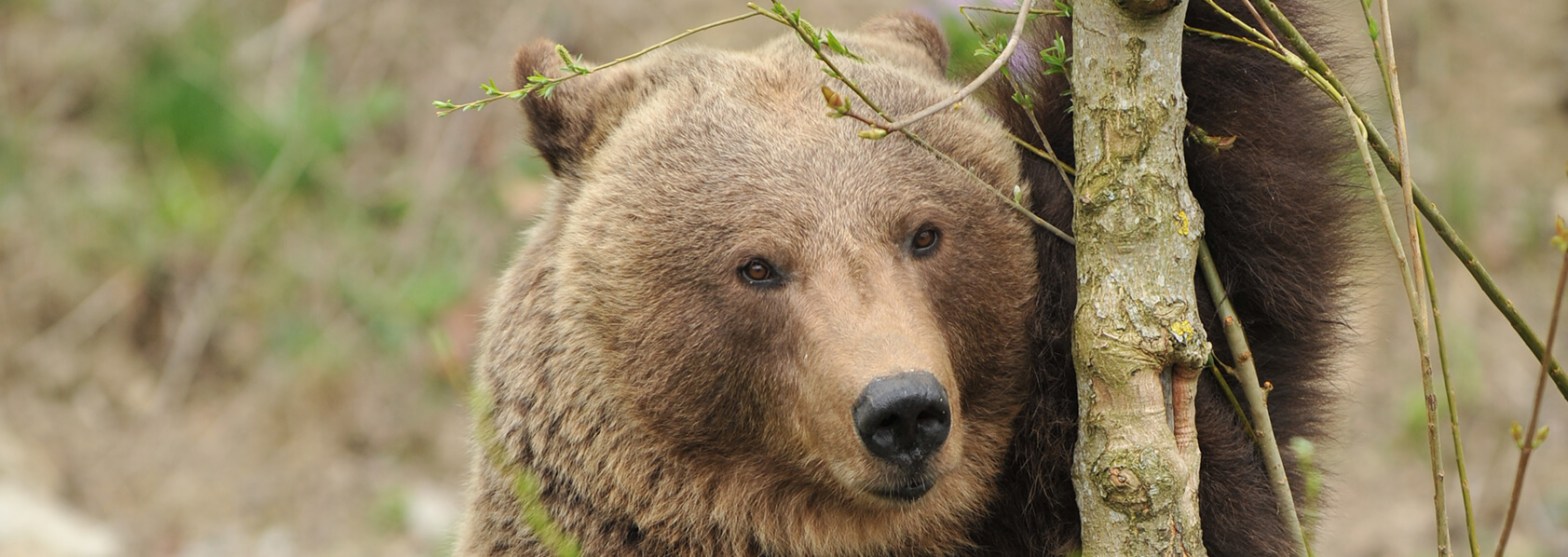
I was recently invited to join a tour of Bern’s bear park, and I learned so much about the city’s bears that I thought I’d share some of it with you. It’s a story with a happy ending for the bears but also a reminder of how cruel supposedly civilized people can be to animals.
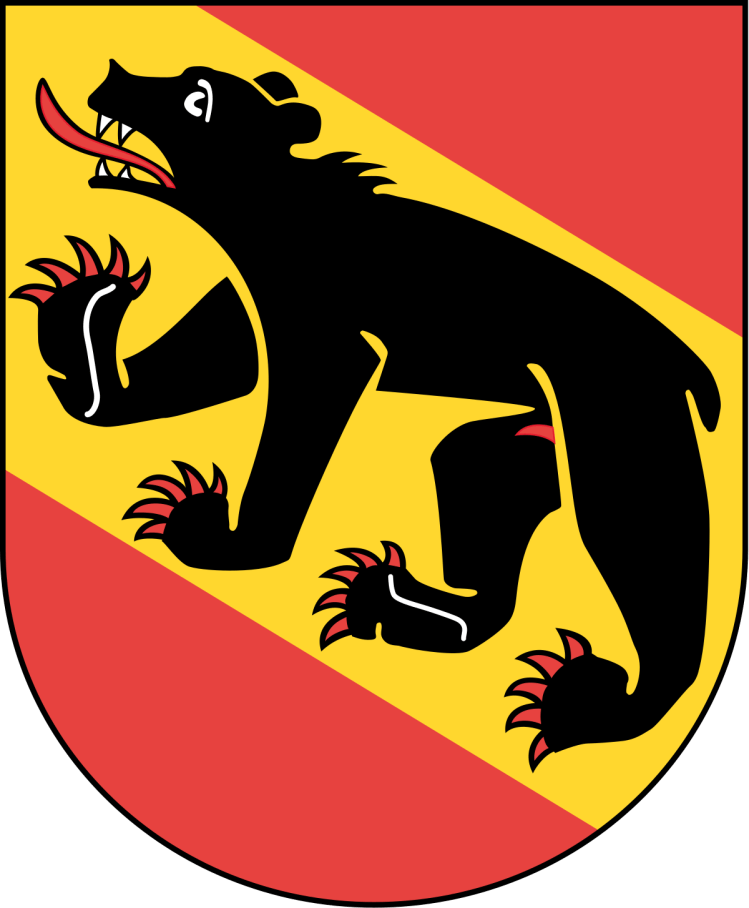
In Bernese-German dialect, bear is Bär, and Bern is Bärn. (The ä is pronounced like the a in France.) Legend insists that when Duke Berchtold V of Zähringer founded Bern in 1191, he named it after a bear he’d killed there. In fact, the name is a probably more than a thousand years older since Berna is Celtic for “canyon.” Brown bears, Europe’s largest predators, are nevertheless the totems of Bern. The city and canton both share a flag and a coat of arms displaying a bear.
The first written record of a live bear being brought into the city dates to 1513; from then on, Bern had its bears. For centuries they were kept in the center of town, but in 1857 two pits, one larger than the other, were dug for the city’s mascots just across the Aare River from Nydegg, the oldest part of the city. Inundated with Swiss and foreign visitors and much loved by the Bernese, these bears were nevertheless kept in terrible conditions as late as 1996. Only two or three bears at a time were shown to the public, but up to twenty were kept on call, so to speak, which meant there were always bears crammed into tiny, individual, metal-floored cages in the big storage area next to the pits. Even the pit was a disaster for the bears because the concrete floor wore out their leg joints. Autopsies on dead bears showed that walking around the pit must have become an agony for them as they aged.

Finally, between 1994 and 1996, the large pit was given mixed sand and gravel flooring that the bears could comfortably walk and lie on. A pond was built for them to cool off in, and great sandstone blocks were added to give them shade, hiding places, and climbing opportunities. The “extra” bears were retired, so the small cages were used only for emergencies, if at all.
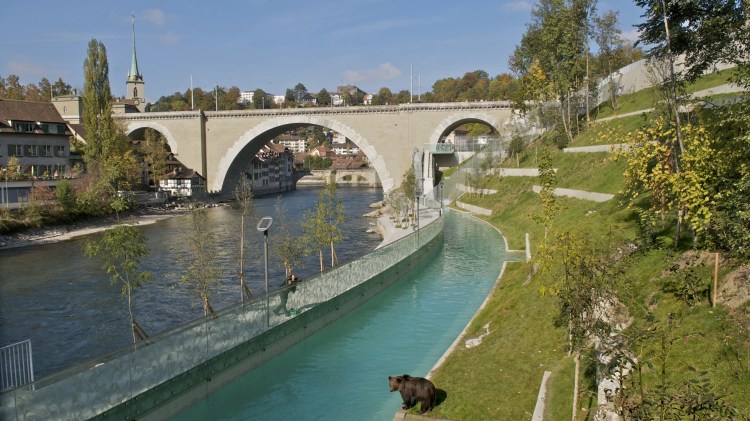
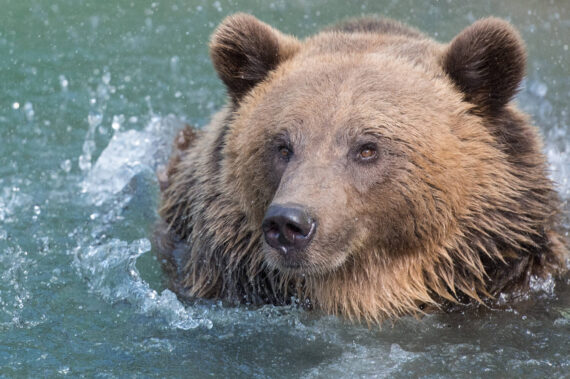
But a pit is still a pit, and keeping bears in a hole in the ground is barbaric. It’s also a bad look for the capital city of a country that attracts twelve million foreign tourists a year. So a bear park was built on the land sloping from the pits on the top of the hill to the Aare River below. Today’s three bears, Finn, Björk, and their daughter Ursina, only spend time in the large pit while their living area is being cleaned and their food distributed. Otherwise, since 2009 they have roamed a large expanse of grass, trees, and underbrush. From the square above the bears’ modern quarters or the path along the river below, visitors can watch Bern’s bears swim in a large pool (fed by the Aare), climb trees, wrestle with each other, or lie in the sun. Their park includes caves built into the hillside where they can retreat if they want privacy and where they hibernate during the winter. They’re under the management of the city’s zoo and receive excellent care.
To prepare themselves for the period when they hibernate (usually November through mid-March), Finn, Björk, and Ursina eat up to ninety pounds of food daily, a mixture of vegetables, fruit, nuts, fish, and meat. Honey is served as a treat or used to entice a bear into the room where they are regularly weighed. Their vegetables and much of their fruit are bought fresh from farmers; the bears are ideal consumers for items that we fussy Western shoppers won’t touch because of their large size or odd shape. As much of the bears’ meat as possible is venison, often roadkill if it is fresh enough. Giving them meat with the fur still on it is essential since it contains nutrients they need.

I was amazed to learn that the bears’ carrots, beets, bulbs of fennel, cabbages, tomatoes, and so on are chopped into relatively small pieces, as is everything else they eat. Every day staff members scatter their food throughout the entire park. This is important: it keeps the bears moving and also entertained, and recreates, at least to some extent, the way they’d have to search for food in the wild. (Not that they’d know that. All three of our bears were born in captivity.)
In past decades, the newest litter of baby bears was presented to the public each Easter, and we couldn’t wait to see them. Today, the unnaturalness of that situation is recognized as a problem. Female bears raise their young for as much as two-and-a-half years; in the wild, the father is long gone before the female emerges from the den with her litter of (usually) two. In the bear park, after Björk had her twins Ursina and Berna, Finn had to be fenced off to protect the babies, making him miserable to the point of illness. Now he has been sterilized, and all three bears, two females and one male, live together harmoniously. (When Berna, the second daughter, grew older, she fought constantly with her mother so she was given to a zoo.) Baby bears are adorable, so we locals miss them, but most people are content to accept what’s best for our bears.

From my apartment, I can take a short, steep path through a small woods down to the Aare; from there, five minutes on a paved walkway along the river brings me to the bear park. Since I walk somewhere by the river almost every day, I pass Finn, Björk, and Ursina several times a week. I feel privileged to have them as neighbors.
One last fact: the collective noun for bears is “sleuth.” A sleuth of bears! That’s a good reason for a mystery author to write a blog post about them, don’t you think?
 Kim Hays
I’m happy to hear that the bears are being treated better than in the past. What a cool story!
LikeLike
Thanks, Marie. I see your posting from Scotland–it sounds like you’re having a great time!
LikeLike