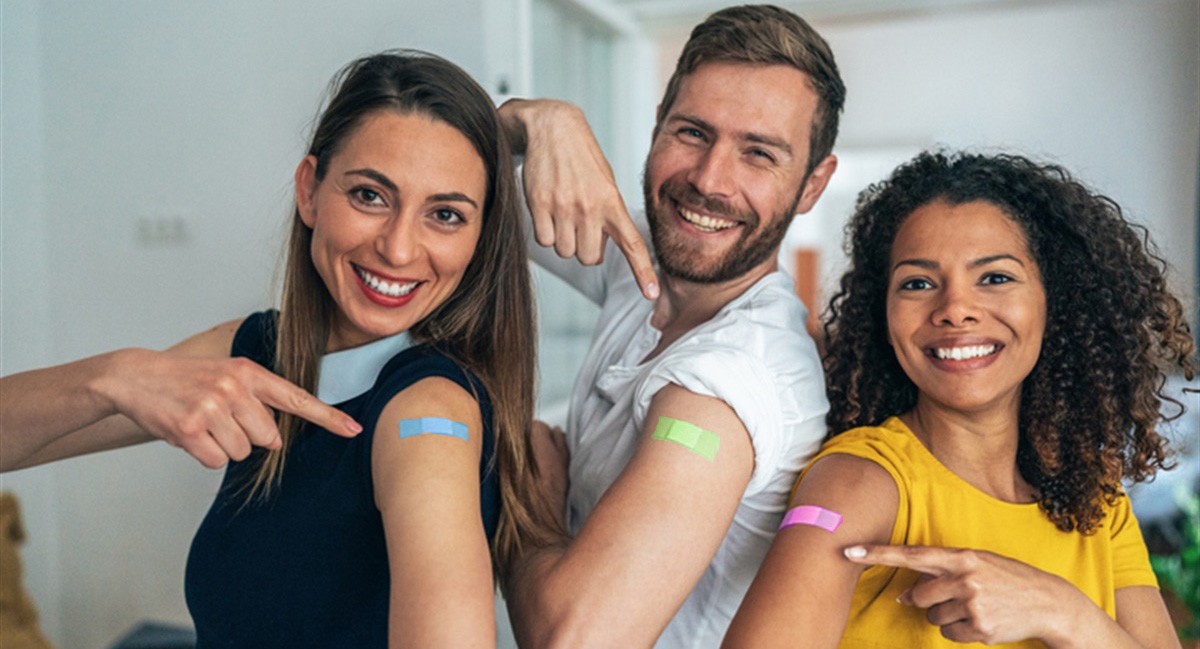
In early February, I went to my doctor’s office for the first of two vaccinations against shingles—I’ll get the second one on April 16. I didn’t have to see the doctor for this; I made an appointment with her lab technician. Two weeks ago, I had a COVID-19 vaccination at the drugstore a few blocks from my apartment—I get one every six months. I make sure I always receive the Moderna version since that is what I’ve been getting since the vaccinations were first available.
My February vaccination against shingles (herpes zoster) has been recommended in Switzerland since 2022, so I was late getting that. And I still haven’t scheduled my three shots against tick-borne encephalitis, which have been available since 2019. My doctor has also suggested that I get the pneumococcal vaccine that prevents certain types of pneumonia and meningitis—I’m glad that’s only one shot. I think some kind of vaccine against bacterial pneumonia has been around for quite a while, but a new variant was approved in 2024.

I get my flu shot every fall, too. This past November, my husband and I also got vaccinated against yellow fever, since we were traveling to a part of Ecuador where the type of mosquitoes that transmit it could conceivably be found. I took care of Hepatitis A years ago. The next time I see my doctor, I’ll ask her if there are any more vaccinations I need to set up.
All my shots get covered by our (admittedly expensive) private health insurance, which every resident of Switzerland is required to have.
As you can see, I have very different ideas about preventive medicine from those of the new Secretary of the US Department of Health and Human Services. I think the researchers and doctors who have developed vaccinations over the centuries and continue to do so are heroes and heroines! In 1796, Edward Jenner inoculated a boy with pus from a cowpox sore to prevent him from getting smallpox*; it took until 1980 for smallpox to be declared eradicated. When you think that in the late nineteenth and early twentieth centuries, polio was the most feared disease in the US, it seems miraculous that today, because of a vaccination developed in 1955, polio has almost been eliminated from the world. Thanks largely to immunization, child deaths worldwide have gone down by over 50% during the last 30 years.
This is a magnificent achievement. But it can’t be sustained without children and adults all over the world continuing to be vaccinated. If the US federal government no longer finances USAID nor helps to support the World Health Organization, university departments that research diseases, and all the other institutions that create new vaccines, update and improve existing ones, and make sure that children in every country get vaccinated, it isn’t just poor people and foreigners who will start to get deadly diseases—they will spread throughout the US, as well.
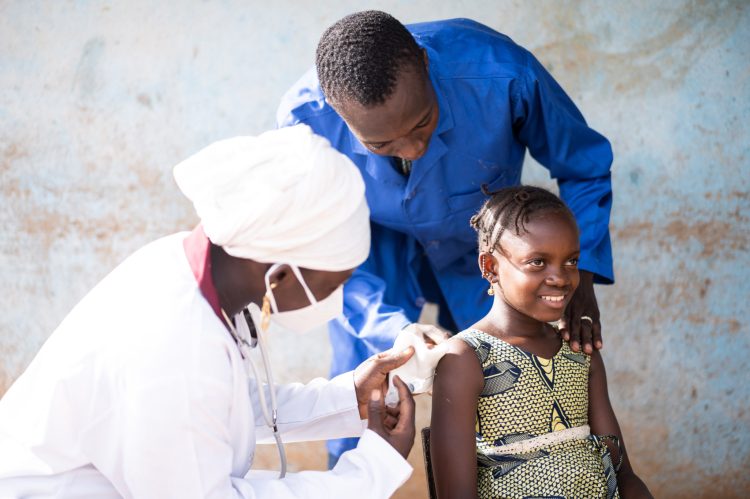
It’s easy for me to preach because, so far, the only adverse reaction to a vaccination I’ve ever had is a sore left arm, occasionally very sore. But I’d rather have my upper arm hurt than be blind in one eye—a complication of shingles—or die prematurely of pneumonia. So I take my shots in stride.
I have, however, had a vaccination adventure, which I’ll tell you about. It starts in Sweden, where I lived after graduating from college from September 1975 through July 1976. During August 1976, I planned to travel alone on the Trans-Siberian railway across the then-Soviet Union to Nakhodka, a city on the east coast of the USSR near Vladivostok. In Nakhodka, I’d board a Soviet boat to Yokohama to spend a few months living in Japan. As part of my preparation for the trip, I called the Japanese Embassy and asked if I needed any shots. I was told I didn’t. Until recently, my informant said, foreigners entering Japan had been required to have a smallpox vaccination, but that requirement had been eliminated.

A few weeks later, I stood in line among at least a hundred people waiting to board the ship to Japan. When it was my turn, a man checked my ticket and asked me in broken English to show him proof of my recent smallpox shot in my vaccination booklet. I had a booklet but no evidence of the shot, since I hadn’t gotten one, and he had no interest in listening to my explanation about the vaccination not being required anymore.
Instead, I was whisked out of the line. My luggage was dumped in the trunk of a taxi, and with no explanation (at least, not one I could understand), I was driven off to what looked like a private house outside town. The taxi driver spoke to the man in the house, who didn’t seem surprised. In under five minutes, he’d stuck a needle in my arm, scribbled a date and signature in the “smallpox” column of my vaccination booklet, and stamped it. I can read that stamp today: in Cyrillic and English, it says Port Health Office, Nakhodka, USSR.

Everyone else was on the boat when the taxi driver sped back into the port, but the gangplank was still down. Carrying my two suitcases and backpack (after a year in Sweden, I wasn’t traveling light), I struggled up to the deck of the boat, where I was greeted with relief by some of the European and Australian passengers I’d gotten to know during the long train ride across Russia—they’d been afraid something terrible had happened to me. The gangplank was lifted within minutes, and we embarked upon our three-day trip to Japan.
No one in Nakhodka had asked me for a single ruble for the taxi ride or vaccination. A potential problem had been handled efficiently, and everyone was delighted to see me disappear.
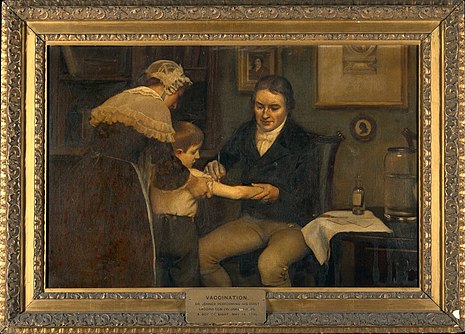
*For all my gratitude toward Jenner, I don’t forget that he inoculated a laborer’s son with cowpox, which made him sick. Once the boy recovered, Jenner infected him with smallpox, and he didn’t catch it and die. If he had died, Jenner would surely have tried his experiment on other working-class children. His callousness appalls me. The fact that I approve of vaccinations doesn’t mean I’m starry-eyed about many of the things people do in the name of science.
 Kim Hays
Excellent post, Kim! I agree that vaccinations are something everyone should take advantage of, despite the views of a certain Democrat-turned-Republican weirdo in Trump’s toxic Cabinet. And I greatly enjoyed reading your 1970s Japan memory!
LikeLiked by 1 person
Thanks very much, Dave. I hadn’t thought about that story in a long time; I remember that crazy taxi ride surprisingly clearly!
LikeLiked by 1 person
Interesting background, good reminder for everyone, and great story!
LikeLike
Thanks, Lynn!
LikeLike