
Over two percent of Switzerland’s nine million people belong to EXIT, one of the nine or ten organizations in Switzerland that offer people who don’t want to live anymore a painless way to commit suicide.
Since 1942, Swiss law has permitted one person to assist another to commit suicide as long as the motive for doing so isn’t self-serving.* In 2009, a new ruling allowed doctors to prescribe drugs for people who wish to die—but only for them to administer to themselves. Euthanasia, the painless killing of a person in pain or with an incurable disease, is still illegal here. People who want to die have to know what they are doing and do it themselves.
That is where an association like EXIT comes in—it employs people who are trained to help its members think through the decision to die and, if they remain convinced, to support them as they inform their families and the appropriate authorities, and then provide them with the means to take their own lives. (Currently, this is usually sodium pentobarbital.)
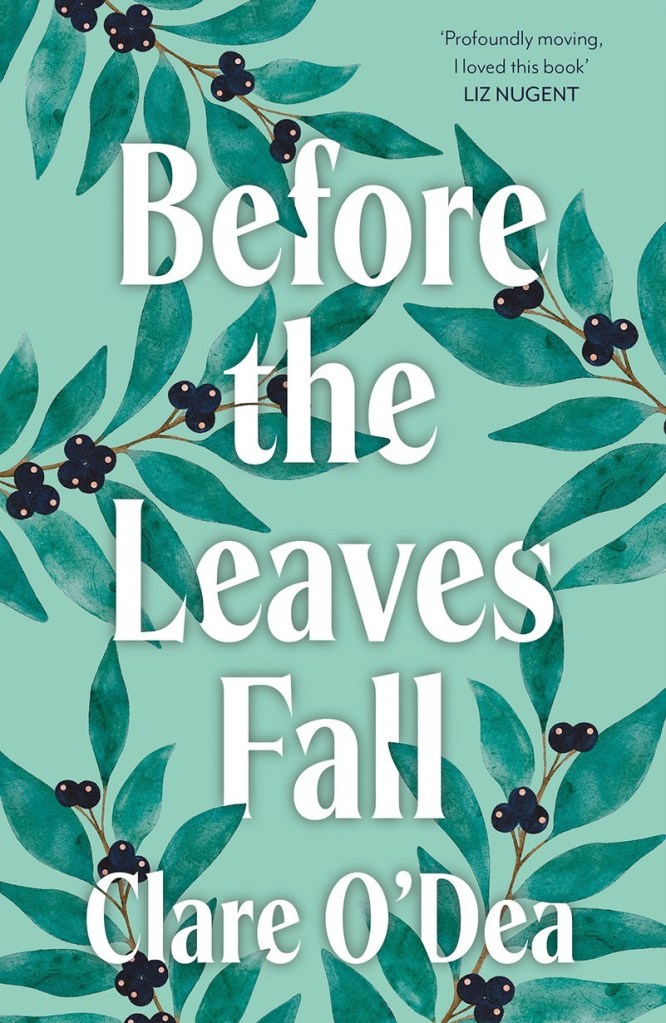
Before the Leaves Fall, by Clare O’Dea, is a novel that deals directly with the assisted suicide process in Switzerland. The story is told by two people: Margrit, who is seeking to end her life, and Ruedi, the Sterbebegleiter (in English, death companion) assigned to her by an EXIT-like organization.
Clare O’Dea, an Irish writer married to a Swiss, has written a beautiful and deeply moving novel about two lonely and secretive people who slowly reach out to each other in friendship. Ruedi is a recent widower in his sixties who misses his wife and finds himself more irritated than comforted by his daughter and grandson. He has only just finished his training as a death companion, and Margrit is his first client. She is over 80, bored and annoyed by her life in a nursing home, infuriated by her pain and the difficulty she has doing much of anything, and no longer invested in her children and grandchildren. For her, the life she finds herself living is not worth continuing.
Throughout the story, Ruedi visits Margrit regularly, and as he advises her to reexamine her life, he finds himself reevaluating his own. Both look back at their experiences, at the people they’ve loved or disliked, at the secrets they’ve kept. As they reflect, they consider the value of their lives and how they want to continue living them—or not. Gently but with fierce effect, the book forces its readers—or, at least, it forced me—to put myself in first Ruedi’s and then Margrit’s position, and consider what life changes it is still possible to make in old age.
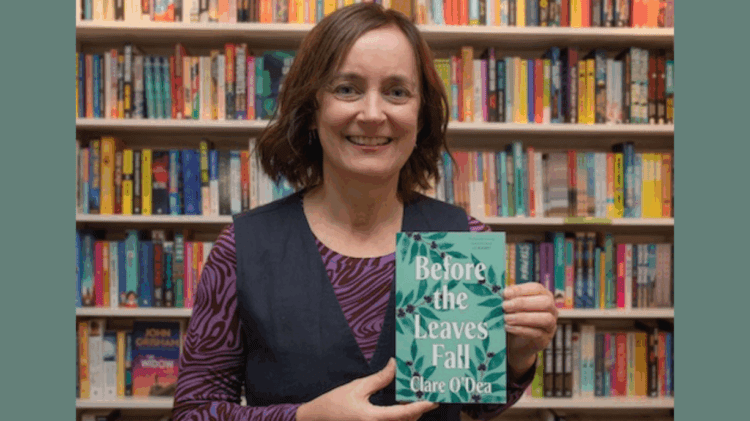
Clare and I are good friends, and like many newcomers to Switzerland, both of us have long been interested in the legality of assisted suicide here. This subject comes up obliquely in my last book, Splintered Justice, in which a woman kills her husband with advanced dementia and is indicted for murder because the Swiss rules about assisted death were ignored. Clare’s book, Before the Leaves Fall, came out only a few weeks ago, on October 23, and has a UK publisher, Fairlight Books. It’s available as an E-Book or paperback on Amazon.com and Amazon.co.uk, or can be ordered through bookstores, including those in Switzerland.
Although it deals with death, Before the Leaves Fall is touching and thought-provoking, rather than depressing. I highly recommend it to you.
*Not that this is necessarily so easy to determine!
The photograph of autumn trees that begins this post is by Berke Çetin.
 Kim Hays
Thank you for this wonderful review, Kim. I’m very grateful for your support at the publication stage and all along the way from the early drafts.
LikeLike
It was a pleasure to help, Clare. You’ve given me a lot of support with my manuscripts, too, as you know! I’ve been delighted to read several other great reviews of the book as well. I hope they keep coming.
LikeLike