On March 8, the Swiss are voting on whether to add three amendments to the constitution. These “initiatives,” as they’re called, have been proposed by one or more politically active citizens who have gathered 100,000 signatures within 18 months to demonstrate sufficiently broad support. The government has decided to offer a “counter-proposal” to one of the initiatives, giving voters the option to choose a watered-down version instead.
The fourth issue to be decided on March 8 is a referendum intended to prevent a new law—one that has been passed by both houses of parliament—from taking effect. If someone with the right to vote can gather 50,000 valid signatures against a new law within 100 days, the Swiss must vote on whether to accept it.
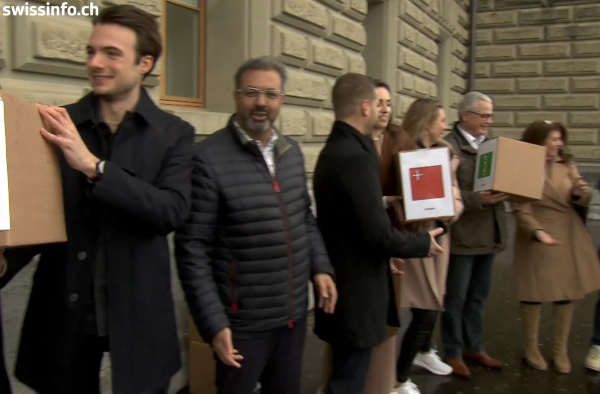
Because of the number of initiatives and referenda at the federal, cantonal, and municipal levels, and frequent questions about large expenditures, we Swiss vote three or four times a year. We elect members to both houses of parliament every four years.
The questions we’re voting on in a few weeks have to do with (1) our ever-shrinking use of cash, (2) cutting funding for public radio and television, (3) how much money the country should invest in reducing Switzerland’s carbon footprint and reversing the negative effects of climate change, and (4) whether husbands and wives should pay income taxes separately or as a unit.
If you’re a Swiss citizen over 18, there is no need to register to vote, since you’re already registered as a citizen and local resident. Your voting materials arrive in your mailbox about a month before voting day: ballots, the necessary envelopes, and excellent information booklets. First, you’re told how the majority of the members of the Swiss legislative and executive branches recommend that you vote on each measure. Since most elected officials don’t favor outsiders attempting to introduce new constitutional amendments or block recently passed laws, the government usually tells you to vote No to initiatives and referenda.
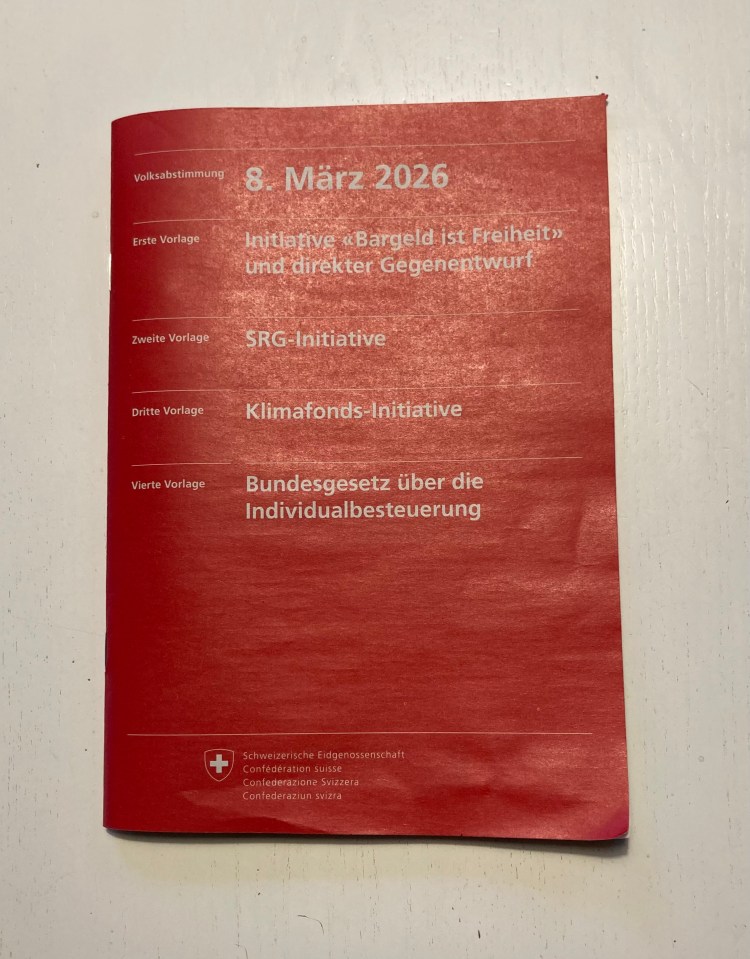
Next, the booklet provides a detailed description of what the committee introducing the amendment aims to achieve. That’s followed by the committee’s arguments for and its opponents’ arguments against the initiative, along with the proposed text of the amendment (which would later have to become law if it is accepted). The booklet follows essentially the same procedure when reporting on attempts to block a law: it describes why a particular group of people feels the law is unnecessary or wrong, offers their arguments against it, and then outlines the government majority’s arguments for it. The exact text of the law is printed in full.
Many people, though probably a minority, read this booklet all the way through, seeking advice on their decisions. Most voters, however, have been watching the arguments for and against the proposals on television and in the newspaper and have already made up their minds. Or they are following rants on social media and want to go along with what their friends are doing. Sometimes they don’t care about the issues or don’t know a vote is happening. Sadly, on average, only 47% of eligible voters in Switzerland vote.
I’m filling out my ballot today, and then I’ll either mail it in the envelope provided or, more likely, walk past the city’s administrative building sometime during the next week and put my ballot through a slot in an outdoor ballot box. On Sunday, March 8, polling places will be open all across Switzerland, including many nearby where I could vote in person. My husband and I did that when our son was a child, taking him along to our nearest polling place so he could see how important it was to vote. Now that he’s an adult, we vote at home well before election day.
Here are the three initiatives:
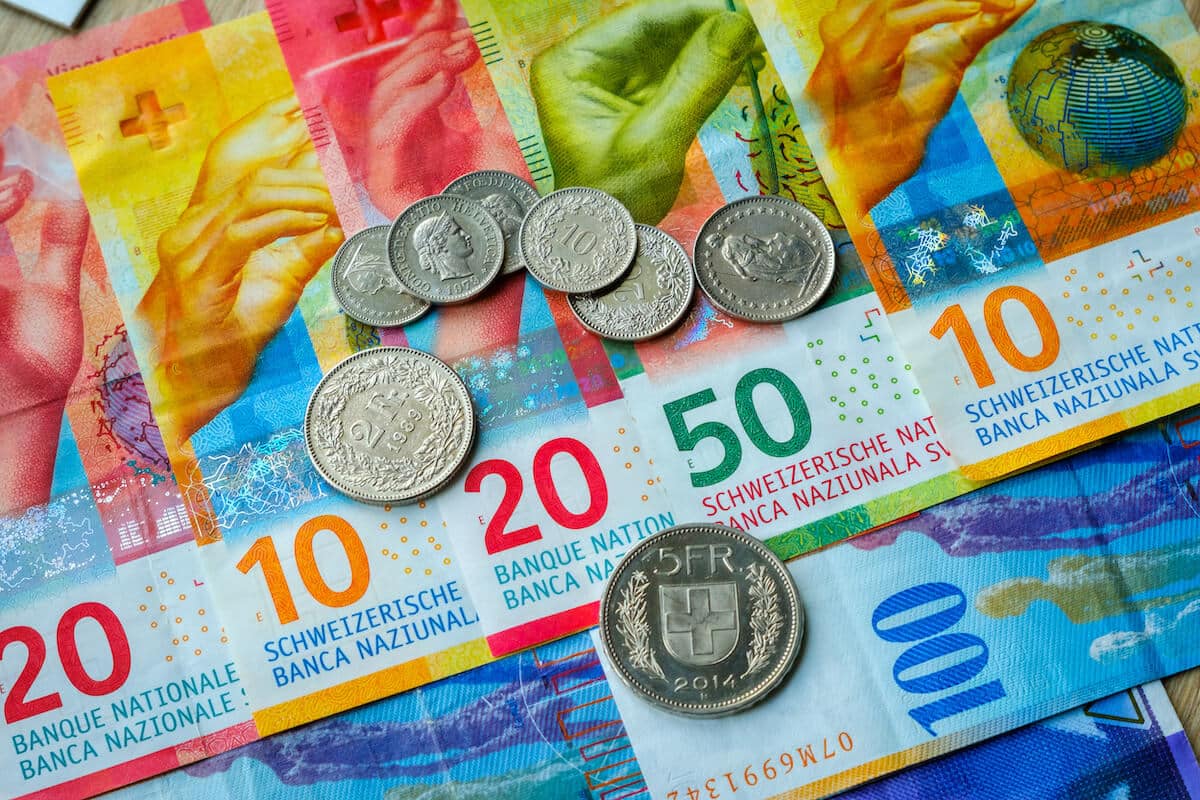
Swiss francs in coins and banknotes. Although Swiss law already requires the Swiss National Bank to ensure that cash is available, this is not enough for the supporters of this initiative, who insist the Swiss constitution must guarantee that enough cash is available to the people at all times. The Swiss government has come up with a counter-proposal, agreeing that the existing law would become part of the constitution, but removing the irrational (in my opinion) idea about being sure we have “enough.”
In Norway, Sweden, South Korea, and a growing number of other countries, cash is rarely used to buy anything. Many Swiss find this trend frightening, and I can see how it disadvantages some, especially the elderly and the poor. Still, I think that the existing law about cash in Switzerland is perfectly adequate; I’m going to vote against both the initiative and the government’s counter-proposal.

Swiss Public Broadcasting (SRG): All Swiss households and firms of a certain size pay an annual sum to support public radio and television, which is tasked with providing local and national news and entertainment as a public service in all four Swiss languages. Supporters of this initiative want to eliminate this charge for companies and reduce what households pay from $390 to $260 per year, although $390 already represents a recent reduction. The official argument is that many people, especially young people, get their news from social media rather than from national news outlets, so less public broadcasting is needed. The unspoken argument is that the SRG favors the political left over the right.
I do not support this initiative. The fact that more and more people are getting their news from places like Instagram, X, and TikTok is a good reason not to cut back on public broadcasting, as far as I’m concerned, but to try to increase its appeal to all.
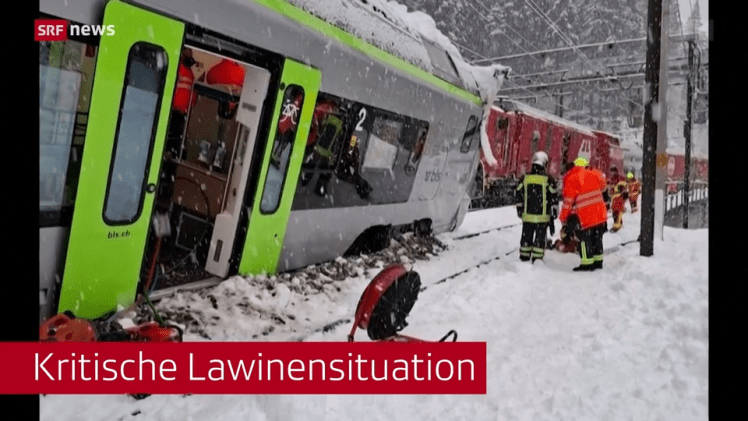
The Climate Fund: This initiative would require the federal government to invest 0.5-1% of Switzerland’s gross domestic product each year ($5-$10 billion) in a fund to combat climate change and its dire consequences. The fund’s supporters argue that every franc invested now would save four or five francs in the future (in part by preventing devastating floods, avalanches, droughts, fires, and other climate-related disasters already occurring in Switzerland), reduce Swiss dependence on the autocratic countries from which we import oil and gas, and create a great many skilled jobs—not to mention help to save the planet.
Those opposed to this initiative find it too expensive. Some worry that its funding might come from increasing sales taxes (which would hurt the poor more than the rich). Others would rather invest federal money in arming Switzerland against Russia than in climate-related problems. Still others argue that Switzerland is already doing enough to address the causes of global warming. This is patently not true. Switzerland is one of the ten countries in the world that are warming faster than all the others.
I will vote for this initiative, since I think nothing any wealthy government can do today is more important than reducing dependence on fossil fuels and increasing biodiversity.
And now, the referendum:
No different tax rules for married couples: For years, I have wanted the government to pass a law requiring men and women to be taxed as individuals, whether single or married, because it would help married women to become more financially independent. Now this law has been passed, but there’s a referendum against it. Some people who oppose the law favor the traditional family model, with men working and women staying home to care for children. The cantons are against it because they would have to hire so many extra people to process the new tax forms that the new law would create. Another reason to oppose the law is that it will reduce federal tax revenue by an estimated $820 million a year.
I’m faced with a dilemma. I want the federal government to collect the taxes it needs to support the social and educational programs it already funds, not to mention invest more in fighting climate change. But I think the old tax law was unfair and sexist.
I have to confess that I’m still thinking about this one. Time to listen to the pros and cons on our still-sufficiently-funded (but perhaps not for long!) Swiss public radio.
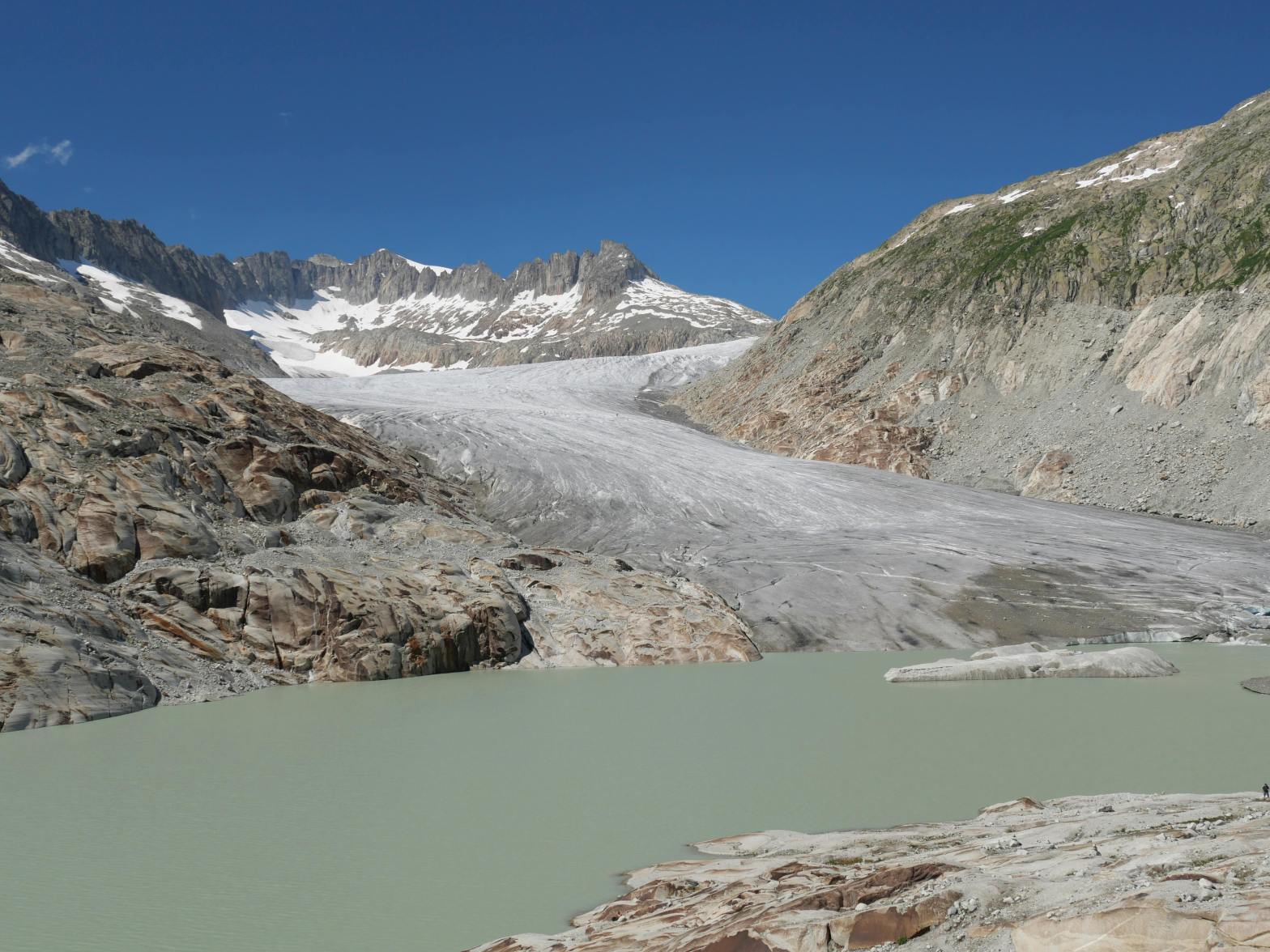
The photo at the top of this post shows a rapidly melting Swiss glacier; it was taken by Dirk Pothen. The picture of Swiss cash is from a blog post by Australian Cassidy Rush, and the photo of the woman in a hard hat is by Chevanon Photography. The pictures of Swiss gold medal winner Loïc Meillart and a Swiss train derailed by an avalanche are from Swiss Broadcasting news videos.


Interesting! Low voting rates, sadly, like here, but I love that the citizens are involved in so much of the decision making.
LikeLike
Yes, a single person or a small group can have a surprising amount of political power in Switzerland. Of course, sometimes “the people” end up voting for an amendment I really disapprove of. But good things happen, too. It is true democracy!
LikeLike
Sounds like Switzerland’s democratic process has a lot of positives, Kim!
LikeLike