
Since my last blog post was about Bern and pumpkins, and the previous posts were about me, I sat down today planning to write about a recently read book. I went through a list of the last six months of titles and found that I didn’t want to review a single one, although I’d admired most of them. It took me a while to figure out why, but eventually, I realized that an honest review would contain some negatives about even the best of those books, and I didn’t want to write anything critical.
Once I identified the source of my hesitancy, I started to analyze it. I know I’ve been reading many more mysteries this year than ever before, trying to keep up with what has become, since Pesticide was published, the literature of my profession. I miss reading straight novels, science fiction, and fantasy (although when Naomi Novik publishes her next book, I’ll read that no matter how many mysteries I have on my to-be-read list!) The dilemma with reviewing the stack of new mysteries I’ve read recently is that I can’t help imagining their authors reviewing my mysteries. Call it cowardice or self-preservation—and it’s both—but it’s also empathy. I know how my heart shrivels when I get a bad review, especially from a fellow mystery writer, so how can I inflict that pain on a colleague? Especially considering I might meet that person at the next Bouchercon, the annual World Mystery Conference I’ve started attending.
There must be writers who feel sure enough about the worth of their work and have had that worth so thoroughly confirmed by their literary and commercial successes that they don’t experience even the slightest twinge of torment when they get a bad review. But I’ll bet there aren’t many of these supremely confident souls! For most of us authors, famous or unknown, our books are our beloveds, and we bleed when they are attacked.
So I won’t write about a book I’ve read recently. Instead, I’ll recommend what may be my favorite fantasy book of all time: Robin McKinley’s The Blue Sword (1982).

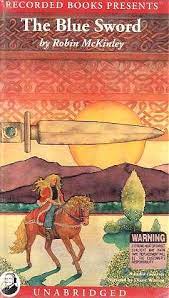
The book’s plot may sound all too familiar: the orphaned young woman who can’t relate to the people she lives with, although they are her own kind; her capture by a young king who trains her to become one of his band of all-male warriors; her discovery of her magical powers; and her triumph in the great battle that follows. It could be a female Luke Skywalker, couldn’t it? Or the protagonist of hundreds of other fantasy tales we’ve read?

Yet it doesn’t read like a collection of clichés—you can take my word for that. For one thing, it was written over forty years ago—any fantasy novel or film using these tropes since 1982 is probably drawing from (or consciously imitating) The Blue Sword, which was instantly recognized as a fantasy masterpiece and became a much-loved classic. An author’s work can’t be stereotypical if she more or less invented the genre!
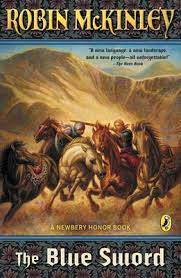
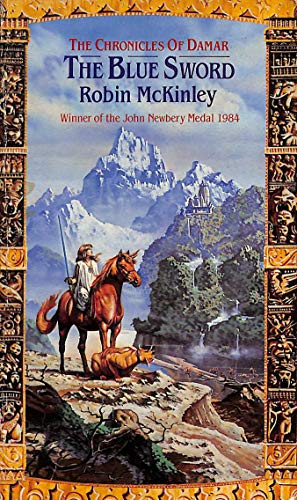
The other reason The Blue Sword doesn’t grate is because it’s so well-written. In 250 pages, McKinley builds a new world with its own people and culture and creates protagonists whom the reader immediately becomes attached to. We experience the heroine Harry Crewe’s painful but satisfying progress as she learns to fight and ride a horse well enough to become a King’s Rider and then becomes a champion of the Hillfolk. We breathlessly watch Harry wield the mythical sword of a long-ago queen as she joins the war against the terrifying Northerners.
Corlath, the king of the Hillfolk, is a profoundly appealing character, too, driven to make Harry one of his warriors without understanding the reason for his decision. The young king is as fascinated by Harry as we are—and puzzled by her, too, as are his Riders.
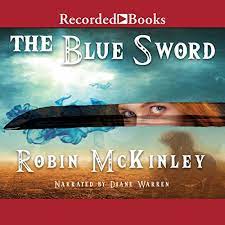
The Blue Sword has a terrific ending in which good triumphs, all questions are answered, and everything is resolved. For all these and more reasons, the book was a runner-up for a Newbery Medal—and, imagine, it was McKinley’s first book! Two years later, The Hero and the Crown was published and won that year’s Newbery. It’s a prequel to The Blue Sword, telling the story of Aerin, the queen of the Hillfolk who preceded Harry by centuries and first defended her people using the Blue Sword and her magic. The second book won a more prestigious prize and is darker and more complex than the first one, and I’ve read it many times, but it’s The Blue Sword that stands out as the more deeply satisfying tale, at least to me.
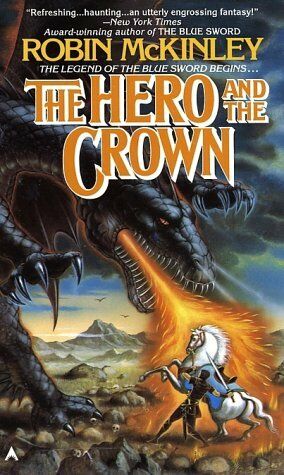
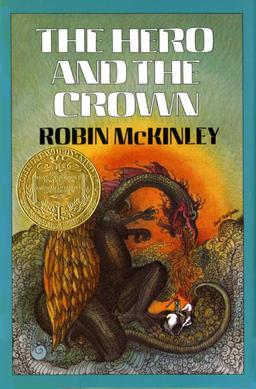
Newbery awards are given to children’s books, which is how these two McKinley novels are classified. But in 1982, I was an adult, and I read first one and then the other novel with pure delight. I would recommend both books—especially The Blue Sword—to any adult who enjoys both well-constructed fantasy and stories of teenage girls growing up.
 Kim Hays
Great post, Kim! You have totally convinced me to put “The Blue Sword” on my to-read list. 🙂
LikeLike
Thanks, Dave! I hope you enjoy it!
LikeLiked by 1 person
I so agree with you. I love, love, love The Blue Sword. And yes, I agree, Robin McKinley basically invented the female fantasy heroine.
In fact I love most of Robin McKinleys books, her quite different take on vampire novels “Sunshine” is great. Some of her fairy tale retellings are excellent, I personally like Deerskin, which is very dark but has totally changed my view of that tale. And I do adore Chalice; I nearly took up beekeeping as a result 😉
If only she wouldn’t be such a slow writer. I’m still waiting for some sequels which may never come.
LikeLike
Hi Katja! I’m delighted to hear you are a McKinley fan like I am–and that you, too, love “The Blue Sword,” And I also thought “Sunshine” was great. I remember liking “Chalice” a lot, but it’s a hazy memory; I’ll have to read it again. The only McKinley book I’ve never read is “Deerskin” because when I started it I decided it was very dark, just as you say. But you’ve inspired me to give it another try, so thank you!
Robin McKinley is only 70, so I, too, hope she’ll go back to writing. Let’s keep our fingers crossed!
LikeLike
It’s been about 4 years since I read it (though that was probably at 5th or 6th reading since the 80’s). I need to read it again!
LikeLike
I’ve read it lots of times, too, and just writing about it made me want to read it again. Or maybe splurge and get it as an audiobook. It would be fun to listen to for a change!
LikeLike