You may have noticed that Switzerland has been in the international news recently.
Last Sunday, on June 14, 55% of Swiss voters rejected a proposal to cap the country’s population at 10 million by 2050. Right now, the country has a little over nine million people. If the Swiss had said yes to the proposal, net migration would have had to be cut in half, perhaps as early as 2030.
Over the past 60 years, the Swiss People’s Party (SVP) and earlier right-wing parties have collected enough signatures to force us to vote on 20 initiatives* aimed at foreigners in Switzerland. Posters advertising many of the earlier initiatives were blatantly racist: a dark-haired, dark-skinned man breaking through the Swiss flag’s white cross, for example, or one of a flock of white sheep kicking a black sheep off the flag’s red surface. Four proposals, two of them clearly anti-Muslim, were accepted by the Swiss during those years: one that banned the building of minarets in Switzerland (2009), one that banned the wearing of burkas (2021), one calling for all foreigners who commit “serious offences” to be deported to their countries of origin (2010), and, finally, one in 2014 that required Switzerland to restrict “mass” immigration by setting quotas. This last one, the most sweeping, which passed by only 50.3%, didn’t cause much change because it was too complicated to implement without damaging our cooperative relationship with the European Union.
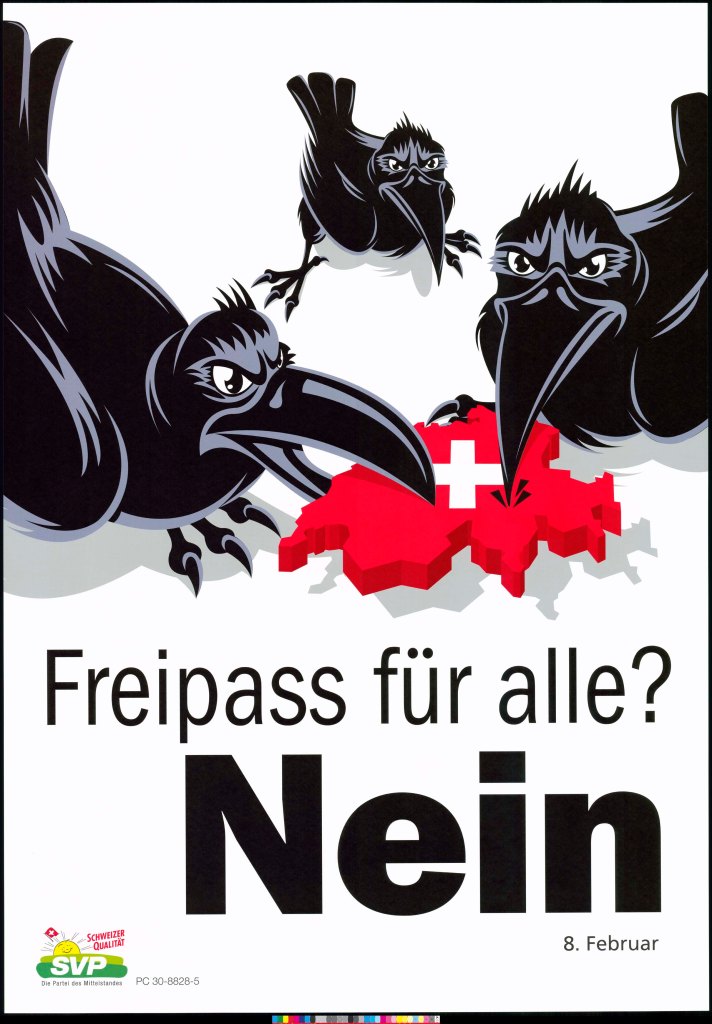
Needless to say, this is not how the Swiss immigration and asylum policies work — it’s how the SVP wants to portray them.
In proposing the 2026 initiative, the Swiss People’s Party wisely kept its xenophobia and racism out of most of its posters and tried to appeal to environmentalists as well as its standard conservative supporters, many of whom are (ironically) climate-change deniers. The vote to limit the population was couched in terms of keeping Switzerland green, limiting the construction of yet more apartments and roads for (foreign) newcomers, and eliminating traffic jams and crowded buses, trams, and trains.
To be fair to the people who were short-sighted enough to vote for the SVP’s proposal, Switzerland is a crowded country despite its land area of around16,000 square miles. That’s because ninety-five percent of its population is crowded into about five percent of its land; the rest is mostly mountains. In addition, 28% of Switzerland’s population (around two-and-a-half million people) are not Swiss citizens. This is an astonishingly high number of foreigners compared to the rest of the world’s countries (except Luxembourg). But we need these men and women. The vast majority of them are other Europeans working as CEOs, software specialists, engineers, doctors, nurses, hospital orderlies, carers for the elderly, construction workers, and service personnel in hotels and restaurants. They aren’t just vital to Switzerland continuing to prosper but also to its continuing to function. With the Swiss having fewer and fewer babies, who does the SVP think will pay taxes and contribute to old-age pensions? Who is going to work in our hospitals, rehab centers, and nursing homes?
The foreigners most feared and resented by the Swiss who vote SVP are the approximately 175,000 men, women, and children either seeking asylum in Switzerland or kept here provisionally because they cannot be sent back to their countries at this time. These people have no income—in fact, they aren’t allowed to work—and are supported by the government—i.e. Swiss taxpayers. At present, the majority come from Afghanistan, Eritrea, Turkey, Syria, and Algeria. Needless to say, they are not taking jobs, apartments, or any other opportunities away from the average Swiss, and expelling them tomorrow (which, by the way, would violate both Swiss law and human rights treaties) would not make Switzerland more environmentally friendly.
I am extraordinarily relieved that the Swiss voted down the SVP’s most recent xenophobic proposal. However, anti-foreigner sentiment is on the rise not just in Switzerland but across Europe, and the Swiss People’s Party will be back with a new strategy to get non-Swiss (especially people of color and Muslims) out of Switzerland within a few years.
In my opinion, Switzerland needs to enact federal laws requiring professional language and cultural orientation classes for newcomers at all income levels. In many cases, job training would be appropriate, too. Right now, the services that do exist are provided at the local level, often by underqualified volunteers. As a result, immigrants’ preparation for life in Switzerland is poor or at least patchy. The political party most likely to block funding for this kind of integration work is the SVP. They don’t want foreigners to be better able to contribute to the Swiss economy and enrich our culture. They just want them gone.
I’ll finish this post by recommending a short piece by my friend and fellow novelist, Clare O’Dea, an Irishwoman with Swiss citizenship who lives in the city and canton of Fribourg, next door to Bern. She wrote about the SVP’s initiative before it was defeated, and I like not only everything she has to say but also the illustrations she used. https://clareodea.com/2026/06/09/help-the-swiss-are-voting-on-immigration-again/
* Any Swiss individual or group can propose new laws (initiatives) or vote against laws that Parliament has passed (referenda) if they can gather enough supporters’ signatures. For details on Switzerland’s unique system of direct democracy, see, for example, https://www.swissinfo.ch/eng/swiss-democracy/how-swiss-direct-democracy-works/89073820. I’ve also written about it in previous posts–for example, https://kimhaysbern.com/2026/02/18/direct-democracy-at-work/
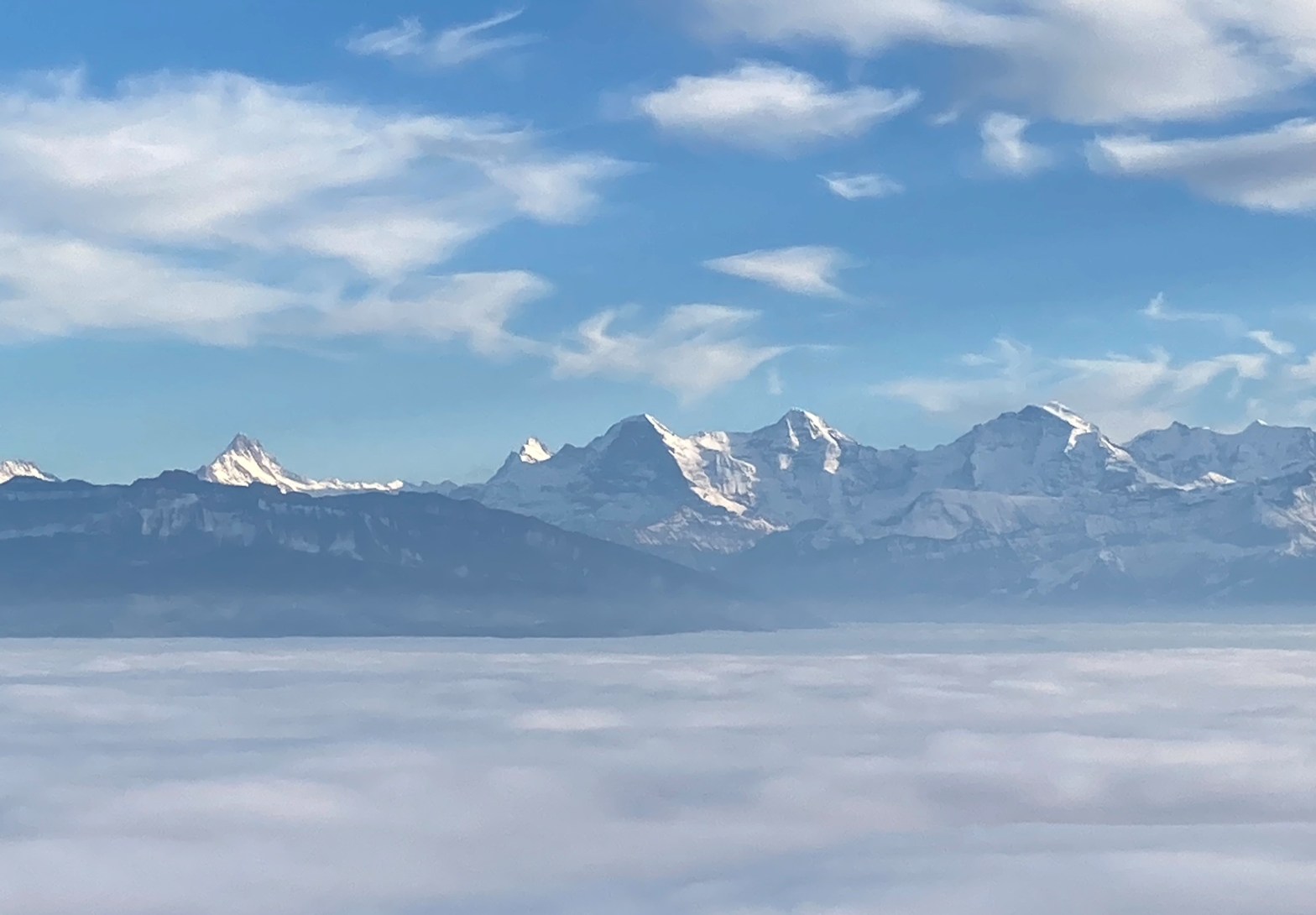
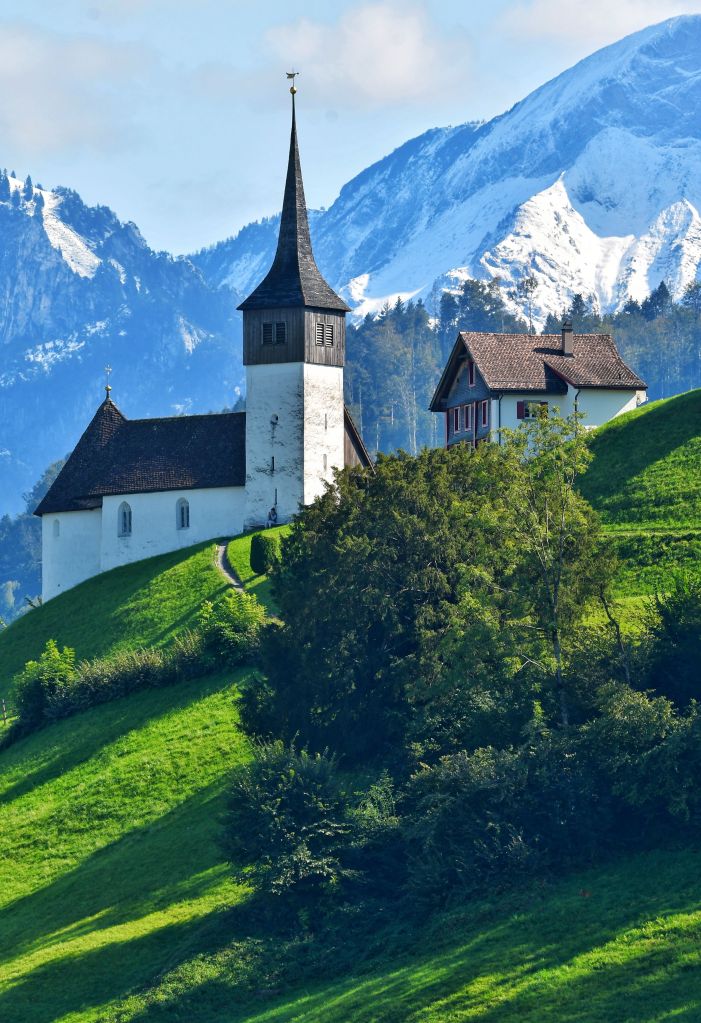
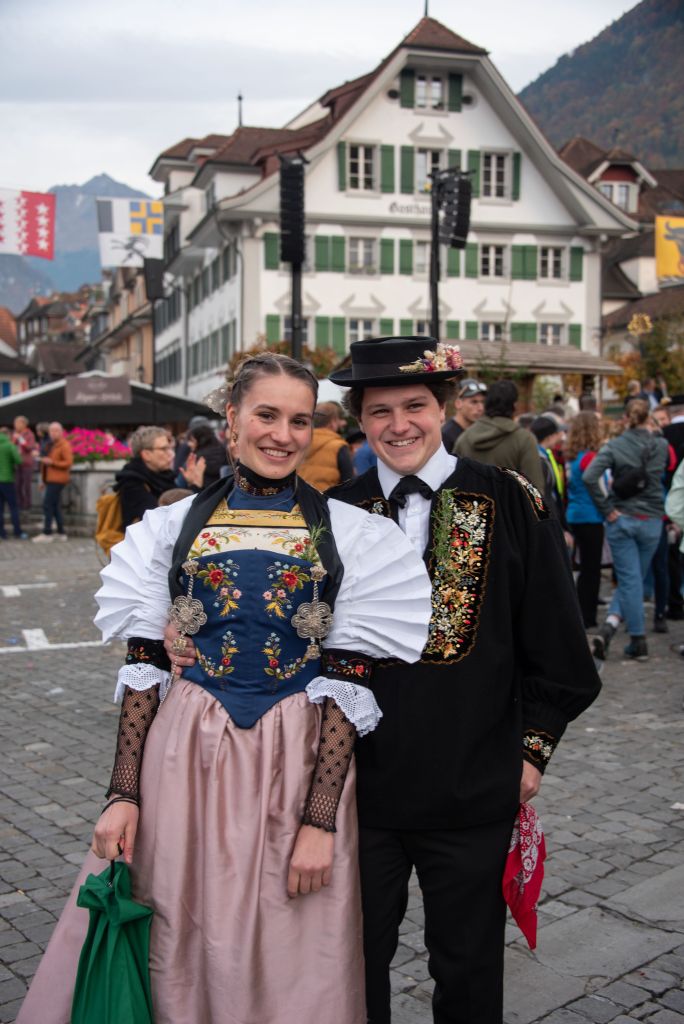
The photos of the Swiss church (by Peter Steiner) and the couple in traditional cantonal costume, or “Tracht,” (by Livia Zumbühl) are from pixels.com. I took the photo of the Swiss Alps above a sea of fog.


Excellent post, Kim! Glad that proposal was rejected June 14, and that there are many open-minded people like you who know that immigration is a great thing for economics, diversity, and other reasons!
LikeLiked by 1 person
What a supportive response, Dave–and fast, too! Thank you. Luckily, the Swiss population–or at least 55% of it–is reasonable. And even if the vote had gone the other way, we couldn’t have anything like the ICE raids in US cities here. At least, I can’t imagine it. There’s no one who would give those kinds of orders here, nor am I sure that anyone would carry them out.
LikeLiked by 1 person
The world’s gone mad. I was glad to see it didn’t pass, but horrified it would even be brought to a vote. The international shift to the right is appalling.
And you’re right, the SVP would be first to protest a reasonable national system to facilitate proper integration. Disgusting.
The illustration Clare O’Dea used in her piece is brilliant!
Hope you all are doing well . . . Here we take our amusement where we can: watching workmen prepare to remove the Trump name from the Kennedy Center, and watching the algae grow in the “deflecting” pool.
Be well!
E ________________________________
LikeLiked by 1 person
Good to hear from you, Ellen. Yes, direct democracy is very scary, but it IS democracy. As we know all too well, “the people” don’t always decide what we want them to. This time (and most of the time while I’ve lived in Bern), I support their decision.
The whole reflecting pool story is mind-boggling. It was even on the Swiss evening news, including the claims of sabotage and vandalism.
LikeLike